
70nm Gold NanoUrchins: The Future of Nanotechnology
Dive into the fascinating world of 70nm gold nanourchins, a revolutionary class of nano-structured materials poised to redefine the future of nanotechnology. These unique nanoparticles, characterized by their spiky, urchin-like morphology, offer unparalleled optical and chemical properties, making them indispensable in cutting-edge research and diverse applications. From advanced diagnostics to targeted drug delivery, the potential of gold nanourchins application is vast and rapidly expanding.
Explore 70nm Gold NanoUrchins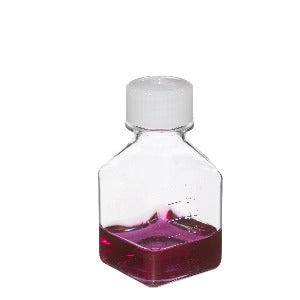
Unveiling the Unique Properties of 70nm Gold NanoUrchins
The distinctive morphology of 70nm gold nanourchins, featuring a spherical core adorned with numerous sharp spikes, grants them exceptional properties that set them apart from traditional spherical gold nanoparticles. These unique structural attributes lead to enhanced localized surface plasmon resonance (LSPR) effects, which are crucial for their advanced functionalities. The increased surface area and numerous "hot spots" at the tips of the spikes significantly amplify their interaction with light and molecules, making them highly sensitive probes and efficient catalysts.
Understanding the precise gold nanourchins properties is key to unlocking their full potential. Their tunable optical properties, for instance, allow for strong absorption and scattering of light in the near-infrared (NIR) region, a transparent window for biological tissues. This characteristic is vital for biomedical applications like bioimaging and photothermal therapy. Furthermore, their high surface-to-volume ratio facilitates superior loading capacity for drugs and biomolecules, a critical advantage in gold nanoparticles for drug delivery systems. The inherent biocompatibility and low toxicity of gold further solidify their position as leading gold nanomaterials in a variety of fields.
The Art of Synthesis and Characterization of Gold NanoUrchins
The precise control over the morphology and size of 70nm gold nanourchins is paramount for their functional performance. Various synthesis of gold nanourchins methods have been developed, typically involving seed-mediated growth approaches. These methods often employ a gold seed nanoparticle, which then acts as a template for the anisotropic growth of the spikes in the presence of specific surfactants, reducing agents, and growth-directing agents. The careful manipulation of these parameters allows for the customization of spike length, density, and overall particle size, ensuring consistent quality for critical applications.
Effective characterization of gold nanourchins is equally vital to confirm their structural integrity, purity, and functionality. Techniques such as Transmission Electron Microscopy (TEM) and Scanning Electron Microscopy (SEM) are employed to visualize their urchin-like morphology and size distribution. UV-Vis-NIR spectroscopy is used to analyze their unique LSPR peaks, confirming their optical properties. Dynamic Light Scattering (DLS) measures their hydrodynamic size and polydispersity, while X-ray Diffraction (XRD) provides insights into their crystalline structure. These rigorous characterization methods ensure that the synthesized gold nanomaterials meet the stringent requirements for advanced research and commercial applications, driving further advancements in nanotechnology.
Major Applications: Gold NanoUrchins Revolutionizing Key Sectors
The exceptional optical, chemical, and biological properties of 70nm gold nanourchins have paved the way for their extensive use across numerous scientific and industrial domains. Their ability to interact efficiently with light and biological systems makes them particularly valuable, spearheading significant advancements in nanotechnology.
Nanotechnology in Medicine: A Golden Era for Health
The medical field is one of the most promising frontiers for gold nanourchins application. Their biocompatibility, combined with tunable optical properties, positions them as ideal candidates for innovative therapeutic and diagnostic strategies. The development of advanced nanoengineering techniques has further enhanced their utility.
- Gold Nanoparticles for Drug Delivery: 70nm gold nanourchins are being engineered as sophisticated carriers for targeted drug delivery, particularly in cancer therapy. Their high surface area allows for the conjugation of a large payload of therapeutic agents, antibodies, or targeting ligands. Upon reaching tumor cells, which often have leaky vasculature, these nanourchins can precisely release their cargo, minimizing systemic toxicity and maximizing therapeutic efficacy. This selective delivery mechanism is a game-changer in gold nanourchins in cancer therapy, offering hope for more effective and less invasive treatments.
- Gold Nanourchins in Diagnostics: For early disease detection and precise monitoring, gold nanourchins in diagnostics are proving invaluable. Their strong LSPR signals enable highly sensitive biosensors for detecting biomarkers of diseases like cancer, infectious diseases, and neurological disorders. They are used in surface-enhanced Raman scattering (SERS) for ultra-sensitive molecular detection and in various immunoassay formats.
- Gold Nanourchins for Imaging: In the realm of biomedical imaging, gold nanourchins for imaging serve as excellent contrast agents. Their strong light scattering and absorption properties allow for enhanced visualization in techniques such as optical coherence tomography (OCT), photoacoustic imaging, and dark-field microscopy. This capability provides high-resolution images of tissues and cellular structures, aiding in diagnosis and guiding surgical procedures.
- Photothermal Therapy (PTT): One of the most exciting biomedical applications of gold nanourchins is in photothermal therapy. When irradiated with near-infrared light, these nanourchins efficiently convert light energy into heat. This localized heat generation can selectively ablate cancer cells without harming surrounding healthy tissue. Their sharp spikes further enhance light absorption and heat generation, making them superior agents for this non-invasive cancer treatment.
Beyond Medicine: Diverse Gold Nanourchins Applications
While their impact on medicine is profound, the versatility of 70nm gold nanourchins extends to many other critical sectors, showcasing the broad reach of the future of nanotechnology.
- Catalysis: The high surface area and numerous active sites on the spikes of gold nanourchins make them excellent heterogeneous catalysts. They can significantly enhance reaction rates and selectivity in various chemical processes, including organic synthesis and environmental remediation. Their robust nature ensures stability and reusability, aligning with principles of sustainable nanotechnology.
- Environmental Sensing and Remediation: Gold nanoparticles in research are actively exploring their use in environmental applications. 70nm gold nanourchins can be integrated into sensors for detecting pollutants, heavy metals, and toxins in water and air with high sensitivity. Their catalytic properties also enable the degradation of harmful organic compounds, contributing to environmentally friendly nanotechnology solutions for a cleaner planet.
- Advanced Materials and Electronics: The unique optical and electrical properties of these nano-structured materials make them valuable components in advanced electronic devices. They are being explored for use in plasmonic circuits, highly efficient solar cells, and next-generation optical data storage devices. Their precise engineering through sophisticated nanoengineering techniques opens up new avenues for innovation in these fields.
The Road Ahead: Advancements and the Sustainable Future of Gold Nanourchins
The field of 70nm gold nanourchins is continuously evolving, with ongoing research focused on refining their synthesis, enhancing their stability, and expanding their application spectrum. Scientists are exploring ways to functionalize their surfaces with specific biomolecules to achieve even greater targeting precision and multi-modal functionalities. The integration of artificial intelligence and machine learning is also accelerating the discovery of novel gold nanourchins synthesis methods and optimizing their properties for specific tasks.
A key focus for the future of nanotechnology with gold nanourchins is the development of sustainable nanotechnology practices. This includes exploring greener synthesis routes that minimize the use of harsh chemicals and reduce waste, ensuring that these powerful materials contribute positively to both human health and environmental well-being. The emphasis on biocompatibility and biodegradability for medical applications, alongside efficient recycling strategies for industrial uses, will ensure that gold nanomaterials remain at the forefront of innovation without compromising planetary health. The continuous breakthroughs in gold nanoparticles in research promise a future where these tiny structures deliver colossal impacts.
Frequently Asked Questions about 70nm Gold NanoUrchins
Ready to Advance Your Research with Gold NanoUrchins?
Discover our high-quality 70nm Endotoxin-Free Gold NanoUrchins, meticulously designed for precision and performance in your most critical applications.
View Our 70nm Gold NanoUrchinsRelated Products

Get in Touch
Have questions about 70nm gold nanourchins or need custom solutions? Contact our experts today!