Essential Guide to ELISA Stabilizer & Blocking Solutions
In the intricate world of immunoassays, particularly Enzyme-Linked Immunosorbent Assay (ELISA), achieving accurate, reproducible, and sensitive results hinges on more than just the primary reagents. The often-overlooked heroes are the ELISA stabilizer and blocking solutions. This comprehensive guide delves into their critical roles, exploring how these specialized reagents ensure the integrity and performance of your assays, and highlighting recent advancements, including the significant impact of 1-Methyl-3-tetradecylimidazolium ELISA applications.

Understanding ELISA: A Quick Overview
ELISA is a powerful analytical tool widely used in research, diagnostics, and quality control to detect and quantify specific substances, such as peptides, proteins, antibodies, and hormones. It relies on the principle of antibody-antigen binding, followed by enzyme-linked detection. While the core steps—coating, binding, washing, detection—seem straightforward, the success of an ELISA run is highly dependent on minimizing non-specific interactions and maintaining reagent stability. This is precisely where the importance of ELISA stabilizers and blocking solutions becomes paramount.
The Crucial Role of ELISA Stabilizers: Ensuring Assay Integrity
ELISA stabilizers are formulated to preserve the biological activity of coated antigens or antibodies on microplates, ensuring their long-term stability and functionality. Without proper stabilization, the delicate biomolecules can degrade, denature, or lose their binding affinity over time, leading to diminished assay performance, reduced sensitivity, and inconsistent results. This makes choosing the best ELISA stabilizer for immunoassays a critical decision for any lab.
Why are Stabilizers So Important?
- Preservation of Activity: Stabilizers create an optimal environment that protects the conformation and activity of coated proteins, preventing degradation due to factors like temperature fluctuations, pH changes, or enzymatic activity. This directly impacts the effectiveness of ELISA stabilizers.
- Extended Shelf Life: They significantly extend the shelf life of pre-coated plates, allowing for bulk preparation and storage, which is crucial for high-throughput applications and commercial kit manufacturing.
- Enhanced Reproducibility: By maintaining consistent coating quality, stabilizers contribute to highly reproducible results across different batches and over time, a key factor in reliable diagnostic and research outcomes.
- Reduced Background Noise: Some stabilizers can also contribute to reducing non-specific binding, working in conjunction with blocking solutions to improve assay specificity.
Types and Advancements in ELISA Stabilizers
Historically, simple protein solutions like BSA were used, but modern demands for higher sensitivity, longer shelf life, and animal-free options have led to the development of sophisticated synthetic and plant-derived formulations. When considering how to choose ELISA stabilizers, factors like the target molecule, assay type, and desired storage conditions play a vital role. The market now offers advanced ELISA stabilizers that are highly effective even at room temperature, providing unparalleled convenience and reducing cold chain requirements. For those mindful of budget, exploring cost-effective ELISA stabilizers that still deliver robust performance is also a viable option.
A comprehensive ELISA stabilizers comparison guide would highlight differences in their protein-stabilizing capabilities, inertness, and compatibility with various detection systems. Many suppliers also offer specialized formulations designed for specific applications, ensuring you can find the ideal product to maintain the integrity of your immunoassay components.
Decoding Blocking Solutions for ELISA Tests: Eliminating Non-Specific Binding
Once the antigen or antibody is coated onto the microplate surface, there remain unoccupied sites on the plastic that can non-specifically bind to subsequent assay components (e.g., detection antibodies, enzyme conjugates). This non-specific binding leads to high background signals, reduced signal-to-noise ratios, and ultimately, inaccurate results. This is where blocking solutions for ELISA tests come into play.
The Mechanism and Importance of Blocking
Blocking solutions work by saturating all remaining unoccupied binding sites on the microplate surface, thereby preventing non-specific interactions. This step is crucial for achieving high specificity and sensitivity in ELISA. Without effective blocking, the assay can suffer from false positives or reduced dynamic range. For ELISA blocking solutions for sensitive assays, the choice of blocking agent is particularly critical to ensure minimal background interference.
Top Blocking Agents for ELISA
The selection of a blocking agent depends on the specific assay, target analyte, and detection system. Common blocking agents include:
- Bovine Serum Albumin (BSA): A widely used protein blocker, effective for many applications. However, it can sometimes contain contaminating antibodies that interfere with certain assays.
- Casein/Non-Fat Dry Milk (NFDM): Cost-effective and efficient, but NFDM can contain biotin or other components that interfere with biotin-streptavidin systems or certain antibody interactions.
- Fish Gelatin: Often used when mammalian protein interference is a concern.
- Synthetic/Proprietary Blockers: Many commercial suppliers offer optimized, animal-free, or low-protein blocking solutions designed to overcome the limitations of traditional blockers. These commercial ELISA blocking solutions are often highly purified and provide excellent performance for diverse assays, including ELISA blocking solutions for protein assays.
While DIY ELISA blocking solutions like NFDM are popular for their cost-effectiveness, they often require careful optimization and might not be suitable for the most sensitive or complex assays. For critical experiments, considering validated custom ELISA blocking solutions or commercial options is often the best approach to ensure optimal performance and reproducibility.
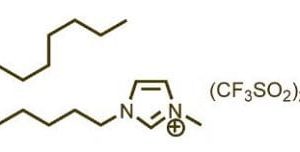
1-Methyl-3-tetradecylimidazolium: A Game Changer in ELISA Applications
Among the myriad of compounds explored for enhancing immunoassay performance, 1-Methyl-3-tetradecylimidazolium stands out as a particularly intriguing and effective agent. This unique ionic liquid offers properties that make it highly beneficial in both stabilization and blocking contexts, pushing the boundaries of traditional ELISA methodologies.
The Unique Advantages of 1-Methyl-3-tetradecylimidazolium in ELISA
1-Methyl-3-tetradecylimidazolium in ELISA is gaining traction due to its amphiphilic nature, allowing it to interact effectively with both hydrophobic and hydrophilic surfaces. This dual functionality enables it to:
- Efficiently Block Non-Specific Sites: Its structure allows it to effectively coat and saturate unoccupied binding sites on microplates, leading to significantly reduced background noise and improved signal-to-noise ratios. This makes it a powerful component for blocking solutions for ELISA tests, especially for sensitive assays where traditional blockers might fall short.
- Stabilize Coated Biomolecules: Beyond blocking, 1-Methyl-3-tetradecylimidazolium has demonstrated remarkable capabilities in stabilizing proteins and other biomolecules coated onto ELISA plates. It helps maintain their structural integrity and functional activity over extended periods, contributing to the overall effectiveness of ELISA stabilizers. This is crucial for pre-coated plates and long-term kit stability.
- Enhance Assay Sensitivity: By minimizing non-specific binding and preserving the activity of capture molecules, its 1-Methyl-3-tetradecylimidazolium usage in assays can lead to enhanced detection limits and improved assay sensitivity, allowing for the detection of even trace amounts of analytes.
- Broad Compatibility: Research indicates good 1-Methyl-3-tetradecylimidazolium compatibility with various assay chemistries and detection systems, making it a versatile additive. This broad compatibility extends its utility across diverse 1-Methyl-3-tetradecylimidazolium ELISA applications, from clinical diagnostics to environmental monitoring.
Examples of its application include its use in developing highly stable diagnostic kits for infectious diseases, where the long-term integrity of antigens is paramount, or in assays requiring ultra-low detection limits for biomarkers in complex matrices. Its ability to perform both stabilization and blocking functions efficiently can also streamline assay development and reduce the number of reagents required, offering a more integrated solution for immunoassay optimization.
How to Choose ELISA Stabilizers & Blocking Solutions: A Strategic Approach
Selecting the right stabilizer and blocking solution is not a one-size-fits-all process. It requires careful consideration of several factors to ensure optimal assay performance. This strategic approach is key to getting the best ELISA stabilizer for immunoassays and the most effective blocking agent.
Key Considerations for Selection:
- Assay Type: Different ELISA formats (e.g., direct, indirect, sandwich, competitive) may have varying requirements for blocking and stabilization.
- Target Analyte: The nature of your analyte (e.g., small molecule, large protein, antibody) can influence the choice of blocking agent and stabilizer. For instance, specific ELISA blocking solutions for protein assays are designed to minimize interference from endogenous proteins.
- Sample Matrix: Complex matrices like serum, plasma, or cell lysates can introduce their own non-specific binding issues, necessitating more robust blocking.
- Sensitivity Requirements: For highly sensitive assays, minimizing background noise is paramount, making the choice of ELISA blocking solutions for sensitive assays critical.
- Storage Conditions: If plates need to be stored for extended periods, a highly effective stabilizer is essential.
- Compatibility: Ensure the chosen stabilizer and blocker are compatible with all other reagents in your assay system (e.g., antibodies, enzymes, substrates). This is particularly important for novel compounds like those used in 1-Methyl-3-tetradecylimidazolium ELISA applications.
- Cost-Effectiveness: While performance is key, balancing cost with efficacy is important, especially for large-scale applications. An ELISA stabilizers comparison guide can help weigh these factors.
Often, a process of empirical testing and optimization is required to identify the ideal combination for a specific assay. Many commercial vendors offer trial sizes or technical support to assist in this selection process, including options for custom ELISA blocking solutions tailored to unique assay needs.
Preparing ELISA Blocking Solutions: Best Practices
Proper preparation of your blocking solution is as important as choosing the right one. While many commercial ELISA blocking solutions come ready-to-use or as concentrated stocks, if you opt for DIY ELISA blocking solutions or need to dilute a concentrate, adherence to best practices is crucial.
Key steps in preparing ELISA blocking solutions typically involve dissolving the blocking agent in an appropriate buffer (e.g., PBS, TBS) at the recommended concentration. Ensure complete dissolution and filter sterilization if necessary to prevent contamination. Always use high-quality, ultra-pure water and reagents to avoid introducing contaminants that could interfere with your assay. Store prepared solutions according to manufacturer guidelines, usually refrigerated, to maintain their stability and efficacy.
Troubleshooting ELISA with Stabilizers & Blocking Solutions
Even with the best reagents, issues can arise. Effective troubleshooting ELISA with stabilizers and blocking solutions is vital for consistent results. Here are common problems and their potential links to these reagents:
- High Background Signal: This is a classic symptom of inadequate blocking. The blocking solution might be insufficient in concentration, of poor quality, or incompatible with your assay. Consider trying a different blocking agent or increasing its concentration.
- Low Signal: If your signal is consistently low, it could indicate issues with the primary antibody or antigen coating stability, pointing to a potential problem with your ELISA stabilizer. The stabilizer might not be effectively preserving the biomolecules, or it could be interfering with subsequent binding steps.
- Poor Reproducibility: Inconsistent results between wells or plates often stem from variable coating quality or incomplete blocking. This highlights the need for a robust best ELISA stabilizer for immunoassays and meticulously prepared blocking solutions for ELISA tests.
- Edge Effect: Sometimes seen as higher signals on the edges of a plate, this can be related to uneven drying of the plate after coating or insufficient blocking in those areas.
When troubleshooting, always verify the expiration dates and storage conditions of your stabilizers and blocking solutions. Small changes in pH or buffer composition can significantly impact their performance. If using 1-Methyl-3-tetradecylimidazolium in ELISA, ensure its concentration is optimized for your specific assay to maximize its benefits without causing any inhibitory effects.
Recent Major Applications and Examples
The continuous refinement of ELISA protocols, driven by improved stabilizers and blocking agents, has expanded its utility across various fields:
- Clinical Diagnostics: ELISA remains a cornerstone for diagnosing infectious diseases (e.g., COVID-19 antibody tests, HIV, Hepatitis), detecting cancer biomarkers (e.g., PSA, CA-125), and assessing hormone levels. Advanced stabilizers ensure the long-term viability of diagnostic kits, while optimized blocking solutions prevent false positives in complex patient samples. For instance, the use of superior blocking solutions for ELISA tests has been critical in developing highly specific rapid diagnostic tests for emerging pathogens.
- Drug Discovery and Development: ELISA is extensively used for screening drug candidates, quantifying therapeutic proteins, and assessing immunogenicity. The precision offered by high-quality stabilizers and blocking agents is crucial for reliable pharmacokinetic and pharmacodynamic studies.
- Food Safety and Environmental Monitoring: ELISA assays are employed to detect allergens, toxins (e.g., mycotoxins), and contaminants in food products, and pollutants in environmental samples. The robust performance provided by effective ELISA stabilizers ensures the accuracy of these critical public health assessments.
- Veterinary Diagnostics: From detecting animal diseases to monitoring vaccine efficacy, ELISA plays a vital role. The stability of reagents is paramount for field applications and consistent results across different veterinary clinics.
The integration of compounds like 1-Methyl-3-tetradecylimidazolium into these applications represents a significant leap forward, offering enhanced sensitivity and stability for challenging assays, thereby broadening the scope of what ELISA can achieve.
Elevate Your ELISA: Explore Our Solutions
Achieving superior ELISA results starts with superior reagents. Whether you are looking for the best ELISA stabilizer for immunoassays, cutting-edge blocking solutions for ELISA tests, or advanced compounds like 1-Methyl-3-tetradecylimidazolium for ELISA applications, we offer a range of meticulously developed solutions designed to optimize your assays. Our products are formulated to ensure maximum stability, minimal background, and unmatched reproducibility, empowering your research and diagnostic efforts.
Frequently Asked Questions About ELISA Stabilizers & Blocking Solutions
Q: What is the primary purpose of an ELISA stabilizer?
A: The primary purpose of an ELISA stabilizer is to preserve the biological activity and conformation of antigens or antibodies coated onto the microplate surface. This prevents degradation, denaturation, and loss of binding affinity over time, ensuring the long-term integrity and consistent performance of the assay. It directly impacts the effectiveness of ELISA stabilizers in maintaining sensitivity and reproducibility.
Q: Why are blocking solutions essential in ELISA tests?
A: Blocking solutions are essential in ELISA tests to prevent non-specific binding of assay components (e.g., detection antibodies, enzyme conjugates) to unoccupied sites on the microplate surface. By saturating these sites, they significantly reduce background noise, improve the signal-to-noise ratio, and enhance the specificity and accuracy of the assay. Choosing the right blocking solutions for ELISA tests is critical for reliable results, especially for ELISA blocking solutions for sensitive assays.
Q: How does 1-Methyl-3-tetradecylimidazolium enhance ELISA performance?
A: 1-Methyl-3-tetradecylimidazolium enhances ELISA performance through its unique amphiphilic properties, allowing it to act effectively as both a blocking agent and a stabilizer. It efficiently saturates non-specific binding sites, reducing background, while also stabilizing coated biomolecules to maintain their activity and extend plate shelf life. This dual functionality contributes to improved sensitivity, specificity, and long-term stability across various 1-Methyl-3-tetradecylimidazolium ELISA applications.
Q: Can I use a DIY blocking solution, or should I opt for commercial options?
A: While DIY ELISA blocking solutions like non-fat dry milk can be cost-effective for some applications, commercial ELISA blocking solutions are generally recommended for sensitive or critical assays. Commercial options are often optimized, highly purified, and formulated to minimize lot-to-lot variability and potential interferences, providing more consistent and reliable results. For specific needs, custom ELISA blocking solutions are also available.
Q: What should I consider when choosing an ELISA stabilizer?
A: When considering how to choose ELISA stabilizers, factors include the type of biomolecule being stabilized (antigen/antibody), the assay format, desired storage temperature and duration, and compatibility with other assay reagents. A thorough ELISA stabilizers comparison guide can help evaluate options based on their protein-stabilizing capabilities, inertness, and cost-effectiveness. For the best ELISA stabilizer for immunoassays, it's often beneficial to test a few options with your specific assay.
Related Products
Contact Us
Have more questions or need assistance in selecting the perfect ELISA stabilizer or blocking solution for your specific needs? Reach out to our experts!