
Explore Goat Anti-Guinea Pig Gold Conjugates: Revolutionizing Biomedical Research
In the dynamic realm of biomedical research, the quest for highly specific and sensitive detection methods is ceaseless. Among the most pivotal advancements are goat anti-guinea pig gold conjugates, precision tools that have transformed immunoassays, imaging, and diagnostic applications. These conjugates combine the remarkable specificity of goat anti-guinea pig antibodies with the unique properties of gold nanoparticles, offering unparalleled capabilities for visualizing biological targets. This comprehensive article delves into the intricacies of these conjugates, their diverse applications, and their synergy with cutting-edge technologies like the latest quantum dots technology, paving the way for groundbreaking discoveries in bioimaging and beyond.
Discover Our Gold Conjugates
Understanding the Foundation: Goat Anti-Guinea Pig Antibodies
At the core of these advanced conjugates lie goat anti-guinea pig antibodies. These are polyclonal antibodies produced in goats, specifically targeting immunoglobulins (antibodies) from guinea pigs. The process involves immunizing goats with guinea pig antibodies, prompting the goat's immune system to produce its own antibodies against these foreign proteins. Once harvested and purified, these goat antibodies in laboratory research serve as highly effective secondary antibodies.
The utility of goat anti-guinea pig antibody uses is vast. In various immunological assays, they are crucial for detecting primary antibodies derived from guinea pigs. For instance, if a researcher wants to identify a specific protein in a tissue sample using a guinea pig primary antibody, the goat anti-guinea pig antibody acts as a detection tool, binding to the primary antibody. This forms an antibody sandwich, which can then be visualized using a reporter molecule. Their high specificity ensures minimal cross-reactivity with antibodies from other species, making them indispensable in multi-labeling experiments and complex biological systems where precision is paramount.
The Power of Gold: Gold Conjugates in Biomedical Research
Gold nanoparticles possess unique optical and electronic properties that make them ideal candidates for biological detection and imaging. When antibodies are attached to these nanoparticles, they form gold conjugates in biomedical research. The conjugation process typically involves either passive adsorption or covalent bonding, ensuring the antibody retains its biological activity while the gold nanoparticle provides a robust and easily detectable label.
The advantages of using gold conjugates are manifold:
- High Electron Density: Gold nanoparticles are highly electron-dense, making them exceptionally visible under electron microscopy. This allows for ultra-high-resolution imaging of cellular structures and protein localization, providing insights at the nanoscale.
- Colorimetric Detection: Gold nanoparticles exhibit distinct red or purple colors in solution, enabling simple visual detection in assays like lateral flow tests. This eliminates the need for expensive equipment, making diagnostics more accessible.
- Stability: Gold conjugates are remarkably stable, resisting photobleaching and degradation, which is a common issue with organic dyes. This stability is crucial for long-term experiments and reliable results.
- Biocompatibility: Gold is largely inert and non-toxic, making it safe for various biological applications, including potential future in vivo uses.
These properties underscore why gold conjugates have become a cornerstone in various diagnostic and research methodologies, from immunohistochemistry to rapid diagnostic tests for infectious diseases.
Synergy in Action: Goat Anti-Guinea Pig Gold Conjugates
The true power emerges when the specificity of goat anti-guinea pig antibodies is combined with the robust detection capabilities of gold nanoparticles, forming goat anti-guinea pig gold conjugates. These conjugates are designed to bind specifically to guinea pig antibodies, providing a visible, high-contrast label for subsequent detection. This combination is particularly valuable in:
- Immunohistochemistry (IHC) and Immunocytochemistry (ICC): For precise localization of guinea pig-derived primary antibodies in tissue sections or cell cultures under light microscopy (using silver enhancement for visualization) or electron microscopy. This offers superior resolution compared to fluorescent methods for ultrastructural analysis.
- Western Blotting: Enabling sensitive detection of target proteins where guinea pig primary antibodies are used, with gold conjugates providing a clear signal on membranes.
- Lateral Flow Assays (LFAs): As the detection reagent in rapid diagnostic tests, where the gold conjugate provides the visible test line, signaling the presence of a guinea pig antibody or antigen captured by it. This is widely used in point-of-care diagnostics.
The reliability and versatility of goat anti-guinea pig gold conjugates make them indispensable tools for researchers aiming for high-fidelity detection and imaging, pushing the boundaries of what is possible in biological analysis.
Beyond Gold: The Transformative Era of Quantum Dots Technology
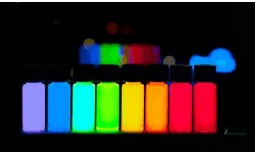
While gold conjugates offer significant advantages, the scientific community continues to seek even more advanced tools. This pursuit has led to the rapid rise of the latest quantum dots technology. Quantum dots (QDs) are semiconductor nanocrystals, typically 2-10 nanometers in size, that exhibit unique quantum mechanical properties. Their most striking feature is their size-dependent emission: by simply changing their size, QDs can emit different colors of light when excited by a single light source.
The process of synthesis of quantum dots involves precise control over their growth, often through colloidal chemistry methods, to achieve desired optical properties. This meticulous synthesis allows for fine-tuning their emission spectrum, making them highly versatile.
So, how quantum dots enhance fluorescence? Unlike traditional organic dyes, QDs have broad absorption spectra but narrow, symmetric emission spectra. This means they can all be excited by a single UV or blue light source, but each different-sized QD will emit a distinct, pure color. This property facilitates multiplexing – the ability to simultaneously detect multiple targets in a single sample without spectral overlap, which is a major `advantage of quantum dots over traditional methods` like conventional fluorescent dyes that suffer from broad emission and photobleaching.
Furthermore, QDs are significantly more photostable than organic dyes, meaning they resist photobleaching and maintain their luminescence for much longer periods, crucial for long-term imaging and super-resolution microscopy.
Cutting-Edge Applications: Where Quantum Dots Shine Brightest
The unique properties of quantum dots have propelled them into the forefront of numerous scientific disciplines, leading to a surge in quantum dots applications in research. From fundamental cell biology to clinical diagnostics, QDs are redefining what's possible.
Quantum Dots for Bioimaging
One of the most impactful areas is quantum dots for bioimaging. Their brightness and photostability make them superior fluorescent labels for both in vitro and in vivo imaging. Researchers can track individual molecules, monitor cellular processes over extended periods, and visualize complex biological networks with unprecedented clarity. For example, in live-cell imaging, QDs can be conjugated to antibodies or ligands to target specific receptors on cell surfaces, allowing real-time observation of receptor dynamics or pathogen entry.
In vivo imaging benefits immensely from QDs' deep tissue penetration and multiplexing capabilities. Scientists can simultaneously image multiple tumor markers or track different cell populations within a living organism, providing comprehensive insights into disease progression or therapeutic efficacy. This is a significant leap forward in quantum dots for imaging techniques.
Quantum Dots for Medical Diagnostics
The high sensitivity and multiplexing potential of QDs are revolutionizing quantum dots for medical diagnostics. They are being developed for highly sensitive detection of biomarkers for early disease diagnosis, including cancer, infectious diseases, and neurological disorders. For instance, QD-based immunoassays can detect disease markers at much lower concentrations than traditional ELISA, enabling earlier intervention. Rapid, portable diagnostic devices utilizing QDs are also emerging, bringing advanced diagnostics closer to the point of care.
Quantum Dots in Cancer Therapy and Drug Delivery
Beyond diagnostics, QDs are showing immense promise in therapeutic applications, particularly in oncology. Quantum dots in cancer therapy are explored for targeted drug delivery, where QDs are loaded with anticancer drugs and functionalized with targeting ligands to deliver the payload specifically to cancer cells, minimizing side effects on healthy tissues. This approach, falling under quantum dots in drug delivery, leverages the QDs' ability to accumulate in tumors via the enhanced permeability and retention (EPR) effect.
Furthermore, QDs can act as photosensitizers in photodynamic therapy (PDT) or as agents for photothermal therapy (PTT), where they convert light energy into heat to ablate tumor cells. These novel applications of quantum dots are currently under intense investigation.
Quantum Dots in Sensor Technology
The exceptional optical properties of QDs also make them ideal for advanced sensor development. Quantum dots in sensor technology are being employed to create highly sensitive and selective biosensors for detecting a wide range of analytes, from environmental pollutants to pathogens and chemical warfare agents. Their ability to change fluorescence in response to specific binding events allows for real-time monitoring and rapid detection, crucial for environmental safety and biodefense.
Recent Advancements and the Future of Quantum Dots
The field of quantum dots is continuously evolving with recent advancements in quantum dots research focusing on improving their biocompatibility, reducing toxicity, and enhancing their long-term stability in biological environments. New synthesis methods are leading to more uniform and efficient QDs, while surface modification techniques are enabling more precise targeting and functionalization for diverse applications.
The convergence of different nanotechnologies, such as integrating goat anti-guinea pig gold conjugates with quantum dots for multi-modal imaging, represents an exciting frontier. Imagine combining the high-resolution electron microscopy capabilities of gold with the multiplexed fluorescent imaging of QDs in a single experiment – this would provide an unprecedented view of biological processes.
The future of quantum dots and their future looks incredibly promising. As research progresses, we can anticipate QDs playing an even more central role in personalized medicine, advanced diagnostics, smart therapeutics, and even next-generation displays and solar cells. Understanding quantum dots is key to unlocking their full potential across these diverse sectors.
Frequently Asked Questions (FAQs)
Explore Related Quantum Dots Products
Discover more cutting-edge solutions for your research and diagnostic needs.
-
Sale!

Cadmium Selenide Zinc Sulfide Quantum Dots- Alkyl (440nm-460nm)
Original price was: ₹53,870.00.₹35,910.00Current price is: ₹35,910.00. -
Sale!
Cadmium Selenide Zinc Sulfide Quantum Dots- Carboxyl (450nm-650nm)
Original price was: ₹62,500.00.₹41,400.00Current price is: ₹41,400.00. -
Sale!

CdSe/ZnS quantum dots, hydrophobic, 530±5 nm, dry
Original price was: ₹35,400.00.₹22,900.00Current price is: ₹22,900.00. -
Sale!
CdSe/ZnS quantum dots, hydrophobic, dry (5×10mg)
Original price was: ₹43,655.00.₹29,303.00Current price is: ₹29,303.00. -
Sale!
CdSe/ZnS quantum dots, hydrophobic, dry (5×5mg)
Original price was: ₹35,400.00.₹22,900.00Current price is: ₹22,900.00. -
Sale!

CdSe/ZnS(core/shell) Quantum Dots, Powder, Hydrophobic (530 ± 5 nm to 650 ± 5 nm)
Original price was: ₹19,482.00.₹11,807.00Current price is: ₹11,807.00. -
Sale!
CdTe Quantum Dots, Hydrophilic, Dry (5×10 mg)
Original price was: ₹42,790.00.₹28,518.00Current price is: ₹28,518.00. -
Sale!
CdTe quantum dots, hydrophilic, dry (5×5 mg)
Original price was: ₹33,832.00.₹22,400.00Current price is: ₹22,400.00. -
Sale!
CdTe quantum dots, hydrophilic, dry (5×50 mg)
Original price was: ₹101,351.00.₹67,567.00Current price is: ₹67,567.00.


Ready to Enhance Your Research?
Explore our premium range of goat anti-guinea pig gold conjugates and advanced quantum dot solutions.
View Our ProductsContact Us for More Information
Have questions or need assistance? Reach out to our experts.