
Exploring 100nm Endotoxin Free Gold NanoUrchins: A Revolution in Nanomedicine and Beyond
In the rapidly evolving landscape of nanotechnology, 100nm Endotoxin Free Gold NanoUrchins stand out as a beacon of innovation. These unique nanoparticles, characterized by their spiky, urchin-like morphology and exceptional purity, are opening new frontiers in biomedical research, diagnostics, and sustainable technologies. Their endotoxin-free nature is particularly crucial for applications requiring direct interaction with biological systems, ensuring minimal immune response and maximum biocompatibility. This article delves into the fascinating world of gold nanourchins, exploring their advanced synthesis methods, diverse applications, and the pivotal role of cutting-edge materials like Imidazolium ionic liquids in their development.
Discover Our Gold NanoUrchins
The Promise of Endotoxin Free Nano Materials: Why Purity Matters
The journey into advanced nanomaterials often encounters a critical hurdle: the presence of endotoxins. Endotoxins, lipopolysaccharides (LPS) from the outer membrane of Gram-negative bacteria, are potent immune stimulators. Even in minute quantities, they can trigger inflammatory responses, fever, and even septic shock, rendering nanomaterials unsuitable for sensitive biomedical applications. This is where the concept of Endotoxin free nano materials becomes paramount. For materials like 100nm gold nanoparticles, especially those designed for intravenous administration or direct cellular interaction, the absence of endotoxins is non-negotiable. Achieving Endotoxin free gold nanomaterials ensures that research findings are reliable and that therapeutic or diagnostic agents are safe for clinical translation. This commitment to purity elevates the integrity and applicability of gold nanourchins in the most demanding biological environments.
Unraveling Gold NanoUrchins Synthesis: Precision and Innovation
The distinctive morphology of gold nanourchins, with their central core and radiating spiky branches, grants them superior optical and surface properties compared to traditional spherical nanoparticles. The synthesis of these complex structures is a testament to the advancements in `nanourchins synthesis methods`. A key area of innovation lies in `Green synthesis of nano materials`, which seeks to minimize hazardous reagents and energy consumption. This approach often involves biocompatible reducing agents and templates. Furthermore, the role of `Imidazolium ionic liquids` is gaining significant traction in facilitating controlled synthesis. These unique salts, liquid at room temperature, offer tunable properties that can influence the nucleation and growth of nanoparticles, leading to highly uniform and well-defined `gold nanourchins synthesis`. The precise control offered by these methods is crucial for producing `100nm gold nanoparticles` with consistent characteristics vital for reliable research and development in `nanotechnology in drug formulation` and beyond.
The Role of Ionic Liquids in Nanotechnology
`Ionic liquids in nanotechnology` have emerged as versatile media for synthesizing a wide array of nanomaterials. Their unique properties, such as negligible vapor pressure, high thermal stability, and excellent solvating capabilities, make them ideal for controlled nanostructure formation. Specifically, `Imidazolium ionic liquid properties` allow for their use as both solvents and capping agents, influencing particle size, shape, and stability. In the context of `gold nanourchins synthesis`, imidazolium ionic liquids can guide the anisotropic growth of gold, promoting the formation of spiky protrusions rather than smooth surfaces. This precise control over morphology is critical for optimizing the surface area and plasmonic properties of the nanourchins, which are vital for their performance in various applications, including `ionic liquids for catalysis` and advanced sensing platforms.
Recent Major Applications of 100nm Endotoxin Free Gold NanoUrchins
The unique attributes of 100nm Endotoxin Free Gold NanoUrchins—their high surface area, localized surface plasmon resonance (LSPR), and biocompatibility—have propelled them into the forefront of numerous cutting-edge applications. Their endotoxin-free status is particularly critical for clinical translation, ensuring safety and reducing adverse biological reactions.
Gold NanoUrchins for Drug Delivery: Precision and Efficiency
One of the most promising applications is in `gold nanourchins for drug delivery`. The spiky surface morphology provides an increased surface area for drug loading, while the nanoscale size allows for enhanced permeability and retention (EPR) effect in tumor tissues. Their biocompatibility, especially when `endotoxin free gold nanomaterials` are used, minimizes systemic toxicity. For instance, researchers are exploring their use to deliver chemotherapeutic agents directly to cancer cells, minimizing side effects on healthy tissues. The ability to functionalize their surface with targeting ligands further enhances their precision, leading to highly efficient and targeted therapeutic interventions. This area of `nanotechnology in drug formulation` is rapidly advancing, promising a new era of personalized medicine.
Gold NanoUrchins in Diagnostics: Enhanced Sensitivity
In the realm of diagnostics, `gold nanourchins in diagnostics` offer superior performance due to their strong LSPR peaks, which are highly sensitive to changes in their local environment. This makes them excellent candidates for biosensing applications. They can be employed in highly sensitive detection of biomarkers for early disease diagnosis, including cancer and infectious diseases. For example, their use in surface-enhanced Raman scattering (SERS) allows for ultra-sensitive molecular detection, providing rapid and accurate diagnostic results. The stability and signal amplification provided by these `gold nanoparticles in research` are revolutionizing point-of-care diagnostics and high-throughput screening.
Nanomaterials for Gene Therapy: A New Horizon
The intricate structure of gold nanourchins also makes them intriguing candidates for `nanomaterials for gene therapy`. Their large surface area allows for efficient loading of nucleic acids (DNA, RNA, siRNA), protecting them from degradation and facilitating their delivery into target cells. The unique optical properties can also be leveraged for light-triggered release of genetic material or for real-time monitoring of gene delivery processes. Being `endotoxin free nano materials` is crucial here to prevent inflammatory responses that could compromise therapeutic outcomes, paving the way for safer and more effective gene editing and gene silencing strategies.
Sustainable Ionic Liquids and Catalysis
Beyond biomedical applications, `Sustainable ionic liquids` are playing a role in the broader synthesis of these advanced materials. The use of `Imidazolium ionic liquids applications` extends to their function as green solvents or catalysts in various chemical reactions. When applied to the synthesis of `gold nanourchins`, these ionic liquids can facilitate eco-friendly production routes, aligning with principles of green chemistry. Furthermore, `ionic liquids for catalysis` can be integrated with gold nanourchins to create highly efficient and reusable catalytic systems, particularly in organic transformations and environmental remediation, showcasing the versatility of these materials.
Ionic Liquids and Surface Chemistry: Modulating Interactions
The `ionic liquids and surface chemistry` of nanoparticles is a fascinating area. Imidazolium ionic liquids can significantly alter the surface properties of gold nanourchins, influencing their stability, dispersibility, and interaction with biological environments. This control over surface chemistry is vital for preventing aggregation and for successful functionalization, which is key for specific targeting in drug delivery or biosensing. Understanding these interactions is fundamental to designing `endotoxin free gold nanomaterials` that perform optimally in complex biological systems, ensuring their long-term stability and efficacy.
Nanoparticle Toxicity Studies and Safety Considerations
While the potential of 100nm Endotoxin Free Gold NanoUrchins is immense, comprehensive `nanoparticle toxicity studies` are essential for their safe translation from laboratory to clinic. The `endotoxin free` nature of these materials significantly reduces acute inflammatory responses, which is a major concern with conventional nanoparticles. However, long-term biodistribution, cellular uptake mechanisms, and potential chronic effects still require rigorous investigation. Researchers are employing advanced analytical techniques to track their fate within biological systems and assess their impact on various cell lines and organs. The goal is to ensure that these `gold nanoparticles in research` not only offer superior performance but also meet the highest safety standards for human application.
Conclusion: The Future is Golden and Endotoxin Free
The exploration of 100nm Endotoxin Free Gold NanoUrchins represents a significant leap forward in `nanotechnology in drug formulation` and beyond. Their unique morphology, combined with stringent endotoxin removal protocols, positions them as ideal candidates for a multitude of applications, from targeted `gold nanourchins for drug delivery` to highly sensitive `gold nanourchins in diagnostics` and innovative `nanomaterials for gene therapy`. The continued research into `Imidazolium ionic liquids applications` and advanced `nanourchins synthesis methods` promises even more sophisticated and sustainable production routes. As we continue to unlock the full potential of these exceptional `endotoxin free nano materials`, they are poised to redefine the boundaries of what is possible in medicine, materials science, and sustainable technology, truly making the future golden and remarkably pure.
Learn More About Our Endotoxin Free Gold NanoUrchinsFrequently Asked Questions About Gold NanoUrchins
Explore Our Related Products
-
Sale!

1-(2-Hydroxyethyl)-3-Methylimidazolium Bis(trifluoromethylsulfonyl)Imide, 99%
Price range: ₹28,128.00 through ₹1,579,426.00 -
Sale!

1-Allyl-3-Methylimidazolium Bis(trifluoromethylsulfonyl)Imide, 99%
Price range: ₹32,752.00 through ₹456,604.00 -

1-Benzyl-3-Methylimidazolium Bis(trifluoromethylsulfonyl)Imide, 99%
Price range: ₹32,752.00 through ₹456,604.00 -
Sale!

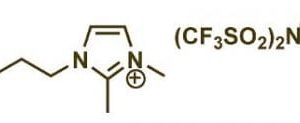
1-Butyl-2,3-Dimethylimidazolium Bis(trifluoromethylsulfonyl)Imide, 99%
Original price was: ₹32,456.00.₹17,082.00Current price is: ₹17,082.00. -
Sale!

1-Butyl-3-Ethylimidazolium Tetrafluoroborate, 98%
Original price was: ₹33,790.00.₹17,784.00Current price is: ₹17,784.00. -
Sale!

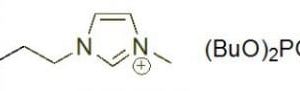
1-Butyl-3-Methylimidazolium Dibutylphosphate, 97%
Original price was: ₹72,026.00.₹37,908.00Current price is: ₹37,908.00. -

1-Butyl-3-vinylimidazolium bis(trifluoromethylsulfonyl)imide, 98%
-
Sale!

1-Decyl-3-Methylimidazolium Bromide, >98%
Original price was: ₹34,679.00.₹18,252.00Current price is: ₹18,252.00. -
Sale!

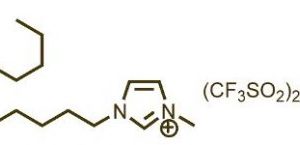
1-Dodecyl-3-Methylimidazolium Bis(trifluoromethylsulfonyl)imide, 98%
Original price was: ₹57,354.00.₹30,186.00Current price is: ₹30,186.00.





Get in Touch
Have questions or need a custom solution? Our experts are ready to assist you.