
The Cornerstone of Immunodetection: Goat Anti-Guinea Pig Antibodies
In the vast landscape of immunological research and diagnostic development, the specificity and reliability of secondary antibodies are paramount. Among these, Goat Anti-Guinea Pig Antibodies stand out as indispensable tools. These antibodies are produced by immunizing goats with guinea pig immunoglobulins, leading to the generation of a robust immune response. The resulting polyclonal antibodies exhibit high affinity and specificity for guinea pig antibodies, making them ideal for a wide array of experimental applications. Their utility spans from basic research, where they help elucidate complex biological pathways involving guinea pig models, to more applied fields like veterinary diagnostics and pharmaceutical research. The core strength of these antibodies lies in their ability to accurately detect and bind to guinea pig primary antibodies, which in turn have targeted specific antigens. This foundational role underscores why understanding their properties is crucial for effective immunological assays.
The reliability of Goat Anti-Guinea Pig Antibodies is not merely about their origin but also their purification and characterization. High-quality preparations ensure minimal cross-reactivity with immunoglobulins from other species, thereby reducing background noise and enhancing the signal-to-noise ratio in assays. This inherent antibody specificity in quantum dot assays and other detection platforms is critical for obtaining precise and reproducible results. Researchers often rely on these antibodies in indirect detection methods, where the secondary antibody carries a label that can be easily detected, amplified, or visualized. This brings us to the innovative enhancements that transform these antibodies from simple detection tools into powerful probes: their conjugation with advanced labels, particularly gold nanoparticles.
Unlocking Potential: Gold Conjugates for Antibodies
The advent of nanotechnology has profoundly impacted biomedical research, and nowhere is this more evident than in the development of Gold Conjugates for Antibodies. Gold nanoparticles possess unique optical and electronic properties, including surface plasmon resonance, which makes them highly effective labels for various immunoassay formats. When antibodies, such as Goat Anti-Guinea Pig Antibodies, are covalently or non-covalently linked to gold nanoparticles, they become powerful probes capable of ultrasensitive detection. The process of creating these sophisticated tools involves precise gold conjugation techniques, which are crucial for maintaining the antibody's biological activity while ensuring stable attachment to the gold nanoparticle.
These techniques typically involve passive adsorption, covalent bonding (e.g., via EDC/NHS chemistry), or affinity-based methods (e.g., using protein A/G). Each method has its advantages, but the goal remains the same: to produce stable, highly sensitive, and specific gold-conjugated antibodies. The resulting gold nanoparticles in biomedical applications offer several benefits: their high electron density makes them excellent contrast agents for electron microscopy, their characteristic red color allows for visual detection in lateral flow assays, and their large surface area enables the attachment of multiple antibody molecules, leading to signal amplification. These attributes make advancements in antibody gold conjugates a significant area of development, continually pushing the boundaries of detection limits in diagnostic and research settings.
Major Applications of Gold-Conjugated Goat Anti-Guinea Pig Antibodies
The combination of highly specific Goat Anti-Guinea Pig Antibodies with the robust properties of gold conjugates has paved the way for numerous groundbreaking applications across various scientific disciplines. These conjugates are indispensable in scenarios requiring precise and sensitive detection methods for guinea pig antibodies or antigens in complex biological samples.
1. Enhanced Immunohistochemistry (IHC) and Immunocytochemistry (ICC)
In pathology and cell biology, IHC and ICC are vital for localizing specific antigens within tissue sections or cells. Gold-conjugated Goat Anti-Guinea Pig Antibodies provide superior visualization compared to traditional enzyme-based methods, especially when combined with silver enhancement. The resulting black precipitate offers high contrast and resolution, allowing for exquisite detail in microscopic analysis. For instance, researchers studying neurological disorders in guinea pig models might use these conjugates to precisely map the distribution of a particular protein within brain tissue, offering insights into disease progression at a cellular level.
2. High-Sensitivity Western Blotting
Western blotting is a fundamental technique for detecting specific proteins in a sample. When detecting guinea pig antibodies or proteins that have been targeted by a primary guinea pig antibody, gold conjugates offer a highly sensitive alternative to chemiluminescence. The signal generated by the gold nanoparticles can be detected optically or by silver enhancement, providing a permanent and quantifiable record. This method is particularly useful for detecting low-abundance proteins or for quantitative analysis, where the intensity of the gold signal directly correlates with the amount of target protein.
3. Rapid and Quantitative Immunoassays (ELISA & Lateral Flow)
Immunoassays using gold conjugates have revolutionized point-of-care diagnostics. In Enzyme-Linked Immunosorbent Assays (ELISA), gold nanoparticles can replace or augment enzyme labels, offering direct visual detection or spectrophotometric quantification. More notably, in lateral flow assays (e.g., pregnancy tests, rapid COVID-19 tests), gold-conjugated antibodies are the workhorses. For example, a rapid diagnostic test for a guinea pig-specific pathogen could utilize gold-conjugated Goat Anti-Guinea Pig Antibodies to capture the target pathogen's antigen, producing a visible line within minutes. This rapid, robust, and cost-effective detection makes them invaluable for field diagnostics and high-throughput screening.
4. Advanced Electron Microscopy
For ultra-high resolution localization of antigens at the subcellular level, gold nanoparticles are unparalleled. Their electron-dense nature makes them ideal labels for transmission electron microscopy (TEM). Researchers can use Goat Anti-Guinea Pig Antibodies conjugated to gold of varying sizes (e.g., 5nm, 10nm, 20nm) for multiplexed labeling, allowing simultaneous visualization of multiple targets within a single cell or tissue section. This provides unprecedented detail into molecular interactions and cellular architecture, essential for understanding fundamental biological processes in guinea pig antibody research.
5. Gold Conjugates in Live-Cell Imaging
While historically gold nanoparticles were primarily used in fixed samples, recent innovations in antibody conjugation have enabled their application in live-cell imaging. By carefully engineering the surface chemistry, gold nanoparticles can be made biocompatible and non-toxic, allowing for the real-time tracking of cell surface receptors or internalized proteins. Although challenging, the potential for observing dynamic biological processes with high spatial resolution using gold conjugates in live-cell imaging is immense, opening new avenues for understanding cellular signaling and drug delivery mechanisms.
The Rise of Quantum Dots in Antibody Research: A Comparative Perspective
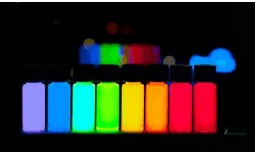
While Gold Conjugates for Antibodies have long been a gold standard, the landscape of fluorescent labeling has been significantly transformed by the emergence of Quantum Dots in Antibody Research. Quantum dots (QDs) are semiconductor nanocrystals that exhibit unique optical properties, including broad excitation spectra and narrow, tunable emission spectra, along with high photostability and brightness. These properties make them highly attractive for fluorescent labeling with quantum dots, particularly in multiplexed assays where simultaneous detection of multiple targets is required.
Understanding Fluorescent Quantum Dots Overview
Fluorescent quantum dots overview reveals their superiority over traditional organic dyes in terms of brightness and resistance to photobleaching, allowing for longer imaging times and more sensitive detection. When used for quantum dots for protein labeling, including antibodies, they enable researchers to visualize cellular components or track molecular events with unprecedented clarity and duration. This makes them particularly valuable in complex biological systems where prolonged observation is necessary.
Quantum Dot Technology in Immunology and Imaging Methods
The application of quantum dot technology in immunology is rapidly expanding. For instance, in flow cytometry, QDs allow for the simultaneous detection of numerous cell surface markers, providing a more comprehensive immunophenotyping profile. In microscopy, quantum dot imaging methods facilitate high-resolution, long-term tracking of immune cells or pathogens. For example, a study might use QDs conjugated to Goat Anti-Guinea Pig Antibodies to track the fate of guinea pig-derived immune complexes in vivo, providing dynamic insights into immune responses.
Comparative Studies: Quantum Dots vs. Gold Conjugates
When considering comparative studies of quantum dots and gold conjugates, each has distinct advantages. Gold conjugates excel in applications requiring electron microscopy (due to electron density), rapid visual detection (lateral flow), and situations where a permanent, non-fading signal is desired. Their cost-effectiveness and ease of use in certain formats are also significant. However, QDs shine in multiplexed fluorescent imaging, where their distinct, narrow emission spectra allow for clear separation of signals from multiple targets. Their exceptional photostability makes them superior for long-term imaging experiments, and their high quantum yield offers unparalleled brightness for sensitive detection. The choice between them often depends on the specific application, desired detection modality, and experimental constraints. Both represent significant advancements in antibody gold conjugates and fluorescent labeling, respectively, pushing the boundaries of what is detectable in biological systems.
The integration of quantum dot applications in diagnostics is particularly promising for next-generation assays that require high sensitivity and the ability to detect multiple analytes simultaneously. For example, a diagnostic panel for guinea pig infectious diseases could leverage QDs to detect several different pathogen-specific antibodies or antigens in a single sample, providing a rapid and comprehensive diagnosis. This multiplexing capability is a key differentiator for QDs, offering a distinct advantage in complex diagnostic scenarios compared to single-target gold conjugate assays.
Innovations and Future Directions in Antibody Conjugation
The field of antibody conjugation is dynamic, with continuous innovations in antibody conjugation techniques and new labeling strategies emerging. Beyond traditional gold and quantum dot labels, researchers are exploring other nanoparticles, polymers, and even enzymatic tags to enhance detection capabilities. The focus is increasingly on creating highly stable conjugates that retain full antibody activity, minimize non-specific binding, and offer improved signal-to-noise ratios. For Goat Anti-Guinea Pig Antibodies, this means developing conjugates that are even more robust for challenging biological matrices and diverse assay formats.
Future directions include the development of smart conjugates that can be activated by specific stimuli, enhancing spatial and temporal control over detection. There's also a growing interest in combining different labeling strategies (e.g., gold and quantum dots) within a single assay to leverage the strengths of each, thereby achieving unprecedented levels of sensitivity and multiplexing. The ongoing guinea pig antibody research will undoubtedly benefit from these advancements, enabling more precise studies of immune responses, disease models, and therapeutic interventions. The continuous refinement of gold conjugation techniques and the exploration of novel nanomaterials promise to further expand the utility of these powerful immunological tools, leading to more accurate diagnostics and deeper scientific understanding.
FAQs about Goat Anti-Guinea Pig Antibodies and Gold Conjugates
Ready to Enhance Your Research?
Discover our high-quality Goat Anti-Guinea Pig Antibodies and advanced Gold Conjugates for Antibodies designed to meet your most demanding research and diagnostic needs. Elevate your detection capabilities with our innovative solutions.
View Our Product RangeRelated Products
-
Sale!

Cadmium Selenide Zinc Sulfide Quantum Dots- Alkyl (440nm-460nm)
Original price was: ₹53,870.00.₹35,910.00Current price is: ₹35,910.00. -
Sale!
Cadmium Selenide Zinc Sulfide Quantum Dots- Carboxyl (450nm-650nm)
Original price was: ₹62,500.00.₹41,400.00Current price is: ₹41,400.00. -
Sale!

CdSe/ZnS quantum dots, hydrophobic, 530±5 nm, dry
Original price was: ₹35,400.00.₹22,900.00Current price is: ₹22,900.00. -
Sale!
CdSe/ZnS quantum dots, hydrophobic, dry (5×10mg)
Original price was: ₹43,655.00.₹29,303.00Current price is: ₹29,303.00. -
Sale!
CdSe/ZnS quantum dots, hydrophobic, dry (5×5mg)
Original price was: ₹35,400.00.₹22,900.00Current price is: ₹22,900.00. -
Sale!

CdSe/ZnS(core/shell) Quantum Dots, Powder, Hydrophobic (530 ± 5 nm to 650 ± 5 nm)
Original price was: ₹19,482.00.₹11,807.00Current price is: ₹11,807.00. -
Sale!
CdTe Quantum Dots, Hydrophilic, Dry (5×10 mg)
Original price was: ₹42,790.00.₹28,518.00Current price is: ₹28,518.00. -
Sale!
CdTe quantum dots, hydrophilic, dry (5×5 mg)
Original price was: ₹33,832.00.₹22,400.00Current price is: ₹22,400.00. -
Sale!
CdTe quantum dots, hydrophilic, dry (5×50 mg)
Original price was: ₹101,351.00.₹67,567.00Current price is: ₹67,567.00.