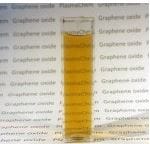
Graphene oxide suspension, a versatile derivative of graphene, is making waves across numerous industries. Its unique blend of chemical and physical characteristics, including excellent dispersibility in water and tunable electronic properties, positions it as a cornerstone material in modern nanotechnology. This article delves into the core properties of graphene oxide suspension, explores the expansive applications of graphene oxide solution, and highlights the significant benefits of graphene oxide suspension that are driving innovation.

Graphene Oxide (GO) is a single atomic layer of carbon atoms arranged in a hexagonal lattice, functionalized with oxygen-containing groups such as hydroxyl, epoxy, and carboxyl groups. When dispersed in a solvent, typically water, it forms a stable graphene oxide suspension or graphene oxide solution. The presence of these functional groups disrupts the sp2 hybridization of graphene, making GO an electrical insulator compared to conductive graphene. However, these groups are crucial for its dispersibility and chemical reactivity, enabling easy integration into various matrices and facilitating further chemical modifications.
Key characteristics of graphene oxide solution include its high surface area, mechanical strength, flexibility, and optical transparency. The oxygen groups also provide sites for covalent and non-covalent functionalization, allowing researchers to tailor its properties for specific applications. The stability of the suspension is often attributed to electrostatic repulsion between the negatively charged GO flakes in polar solvents like water.
The functionality of graphene oxide suspension in diverse applications stems from its unique structure and chemical composition. In composites, GO flakes act as reinforcing fillers, enhancing mechanical strength and thermal stability. In electronics, reduced graphene oxide (rGO), derived from GO, can be used to create conductive pathways. For environmental applications like water treatment, GO's large surface area and functional groups enable the adsorption and removal of pollutants.
The process of how graphene oxide suspension works is highly dependent on the specific application. For instance, in drug delivery, the surface functional groups allow for drug loading via covalent bonding or physical adsorption. In sensors, changes in the electrical or optical properties of GO or rGO upon interaction with target molecules form the basis of detection. Understanding these fundamental mechanisms is key to unlocking the full potential of this material.
The versatility of graphene oxide solution has paved the way for its adoption in a wide array of sectors. The applications of graphene oxide solution are continuously expanding as research and development progress.
While GO itself is an insulator, its reduced form (rGO) exhibits tunable conductivity, making it valuable in electronics. Graphene oxide in electronics is used in flexible displays, transparent electrodes, field-effect transistors, and sensors. Its high surface area and compatibility with various substrates are significant advantages.
GO and rGO play a crucial role in enhancing energy devices. Graphene oxide for energy storage is utilized in supercapacitors and batteries, improving energy density and charge/discharge rates. In solar cells and fuel cells, GO derivatives can act as catalysts or components to improve efficiency and durability. These advancements are vital for the future of renewable energy.
The biocompatibility and surface properties of GO make it promising for medical uses. Graphene oxide for biomedical applications includes drug delivery systems, where GO can load and release therapeutic agents precisely. It is also explored for biosensing, tissue engineering, and cancer therapy (e.g., photothermal therapy). Graphene oxide for drug delivery offers potential for targeted and controlled release.
GO is highly effective in environmental remediation. The environmental applications of graphene oxide primarily focus on water purification and air filtration. Graphene oxide for water treatment can remove heavy metals, dyes, organic pollutants, and bacteria through adsorption and filtration membranes. Its high surface area and functional groups make it an excellent adsorbent.
Adding GO to polymers, ceramics, and metals can significantly improve their properties. The uses of graphene oxide in composites range from enhancing mechanical strength and thermal conductivity to providing barrier properties. This is particularly relevant in industries requiring lightweight yet strong materials.
Graphene oxide in coatings and additives offers enhanced properties like corrosion resistance, antimicrobial activity, wear resistance, and thermal conductivity. GO can be dispersed in paints, polymers, and lubricants to impart these beneficial characteristics, widening its graphene oxide applications in industry.
As a key nanomaterial, graphene oxide in nanotechnology is fundamental to numerous research areas. The ease of synthesis of graphene oxide suspension and its functionalization capabilities make it a popular starting material for developing new nanomaterials and exploring novel phenomena. Graphene oxide solution for research is widely used in academic and industrial labs globally.
The widespread interest in GO is driven by its numerous advantages. The primary benefits of graphene oxide suspension include its excellent dispersibility in water and other polar solvents, which facilitates processing and integration into various systems. Its surface is highly functionalizable, allowing for tailored interactions and properties. GO is also relatively cost-effective to produce compared to pristine graphene. Furthermore, its mechanical robustness, high surface area, and tunable electronic properties (upon reduction) make it a superior material for many applications where traditional materials fall short.
Research into GO is dynamic, leading to continuous advancements in graphene oxide technology. Novel synthesis methods are being developed to improve yield, quality, and reduce environmental impact. Functionalization techniques are becoming more sophisticated, enabling precise control over GO's interactions. Scaling up production remains a key focus to meet industrial demand.
The market trends in graphene oxide solutions show significant growth, driven by increasing adoption in electronics, composites, and energy sectors. As production costs decrease and performance benefits become clearer, GO is poised to become a mainstream material in many high-tech applications. This growth underscores the potential of graphene oxide in nanotechnology.
Ready to harness the power of graphene oxide for your research or industrial application? Discover high-quality graphene oxide suspension and related products designed for performance and reliability.