
Maximize ELISA Efficiency with Stabilizer & Blocking Solution
In the intricate world of immunoassay, achieving precise and reliable results is paramount. Enzyme-Linked Immunosorbent Assay (ELISA) stands as a cornerstone technique, yet its performance can be significantly impacted by factors like reagent stability and non-specific binding. This comprehensive guide delves into how advanced ELISA stabilizer solutions and potent blocking solutions for immunoassays are revolutionizing assay efficiency, ensuring robust and reproducible data. Discover the secrets to improving ELISA results with stabilizers and mastering the art of blocking for unparalleled assay integrity.
Explore ELISA Solutions Now
The Crucial Role of ELISA Stabilizers: Ensuring Long-Term Integrity
ELISA assays, while powerful, are sensitive to the degradation of their key components, particularly enzymes and antibodies. Over time, these delicate biomolecules can lose their activity, leading to reduced sensitivity, increased background noise, and ultimately, unreliable results. This is where high-quality ELISA stabilizer solutions become indispensable. They are specifically formulated to maintain the conformational integrity and biological activity of conjugates, antigens, and antibodies coated onto microplates or stored in solution.
What Are ELISA Stabilizers and Why Are They Essential?
ELISA stabilizers are buffers or solutions designed to preserve the functionality of assay components. Their primary function is to prevent denaturation, aggregation, and degradation of proteins, enzymes, and antibodies, especially during storage at various temperatures and over extended periods. Without proper stabilization, the shelf life of ELISA reagents would be significantly limited, leading to increased costs due to frequent reagent replacement and inconsistent assay performance.
The benefits of employing effective stabilization techniques for ELISA are multi-fold:
- Extended Shelf Life: Dramatically increases the stability of coated plates and conjugated reagents, allowing for longer storage and reducing waste.
- Enhanced Reproducibility: Ensures consistent assay performance across different batches and over time, crucial for reliable research and diagnostics.
- Reduced Assay Variability: Minimizes day-to-day and plate-to-plate variations, leading to more accurate data.
- Cost-Effectiveness: By extending reagent shelf life, cost-effective ELISA stabilizers reduce the need for frequent purchases and preparation, saving valuable resources.
- Improved Signal-to-Noise Ratio: Helps maintain enzyme activity and antibody specificity, contributing to clearer signals and lower background.
Introducing 1-Methyl-3-tetradecylimidazolium: A Game-Changer in ELISA Stabilization
Among the various compounds explored for their stabilizing properties, 1-Methyl-3-tetradecylimidazolium in ELISA has emerged as a particularly promising agent. This unique compound, a type of ionic liquid, offers distinct advantages over traditional stabilizers. Its amphiphilic nature allows it to interact favorably with both hydrophilic and hydrophobic regions of biomolecules, providing a robust protective shield.
The 1-Methyl-3-tetradecylimidazolium applications in immunoassay are expanding due to its exceptional ability to prevent protein denaturation and maintain enzymatic activity. Researchers are increasingly turning to this innovative solution for its superior performance in maintaining the stability of enzyme conjugates and coated antigens.
Key 1-Methyl-3-tetradecylimidazolium benefits include:
- Superior Protein Preservation: Offers excellent protection against thermal and chemical denaturation of antibodies and enzymes.
- Enhanced Enzyme Activity: Maintains the catalytic efficiency of enzyme conjugates, leading to stronger and more consistent signals.
- Broad Compatibility: Works effectively across a wide range of assay conditions and biomolecules.
- Reduced Non-Specific Binding: While primarily a stabilizer, its unique properties can also contribute to minimizing unwanted interactions.
Understanding the full spectrum of 1-Methyl-3-tetradecylimidazolium effects on assays is crucial for laboratories aiming for peak performance. Its integration into best ELISA stabilizer solutions represents a significant leap forward in assay reliability and longevity.
When selecting the best ELISA stabilizer solutions, consider those that incorporate advanced components like 1-Methyl-3-tetradecylimidazolium, ensuring your reagents remain active and reliable for prolonged periods. This strategic choice is fundamental for improving ELISA results with stabilizers and streamlining your research workflows.
Mastering ELISA Blocking Solutions: Eliminating Non-Specific Binding
Beyond stabilization, another critical step for achieving accurate ELISA results is effective blocking. After coating the microplate with an antigen or antibody, there will inevitably be uncoated areas on the plastic surface. These bare surfaces can non-specifically bind to detection antibodies or enzyme conjugates, leading to high background signals, reduced assay sensitivity, and false positive results. This is precisely why blocking solutions for immunoassays are indispensable.
Why Blocking is Essential: Understanding ELISA Blocking Solutions
The primary purpose of a blocking solution is to saturate all unoccupied binding sites on the microplate surface, preventing any subsequent non-specific interactions between the assay reagents and the plastic. By effectively "blocking" these sites, the solution ensures that only specific antigen-antibody reactions contribute to the signal, thus enhancing the accuracy and reliability of the assay.
A thorough understanding ELISA blocking solutions reveals that they typically consist of proteins or polymers that bind to the plastic surface without interfering with the specific immunoreactions. Common blocking agents include bovine serum albumin (BSA), non-fat dry milk, casein, and various synthetic polymers.
How to Use Blocking Solutions in ELISA: Best Practices
The correct application of blocking solutions is as crucial as their composition. Here are some best practices for ELISA blocking solutions:
- Optimized Concentration and Incubation Time: The optimal concentration and incubation time of a blocking solution can vary depending on the specific assay, plate type, and reagents used. It is often determined through careful optimization experiments to achieve maximum blocking efficiency with minimal interference.
- Thorough Washing: After the blocking step, it's vital to wash the plates thoroughly to remove any unbound blocking agent that could potentially interfere with subsequent steps.
- Choosing the Right Agent: While many blocking agents exist, not all are suitable for every assay. For example, milk-based blockers might contain biotin, which can interfere with biotin-streptavidin systems. Therefore, selecting the appropriate agent is a key aspect of scientific use of blocking agents in ELISA.
- Temperature Considerations: Blocking is typically performed at room temperature or 37°C, with incubation times ranging from 30 minutes to overnight, depending on the protocol.
Ongoing research on ELISA blocking solutions continues to explore novel compounds and formulations that offer superior blocking capabilities, particularly for complex sample matrices or highly sensitive assays. Effective blocking is a cornerstone for enhancing ELISA assay performance and achieving pristine results.
Synergistic Impact: Stabilizers and Blocking Solutions Combined
While ELISA stabilizers and blocking solutions each play distinct, vital roles, their combined application creates a powerful synergy that profoundly impacts assay quality. By simultaneously ensuring the longevity of reagents and preventing non-specific binding, laboratories can achieve unprecedented levels of precision and reliability in their immunoassay work.
Improving ELISA Results with Stabilizers and Blocking Solutions
The integration of premium ELISA stabilizer solutions and optimized blocking solutions for immunoassays leads directly to a significant improvement in overall assay performance. This holistic approach addresses two of the most common challenges in ELISA: reagent degradation and high background noise. When these issues are mitigated, the assay's dynamic range increases, its sensitivity improves, and the specificity of detection is greatly enhanced.
Consider the scenario where an assay is performed with unstable reagents. Even with perfect blocking, the signal might be weak or inconsistent due to degraded enzyme conjugates or denatured antibodies. Conversely, highly stable reagents used without proper blocking will suffer from high background, obscuring the true signal. It's the combination that unlocks true potential for enhancing ELISA assay performance.
Maximizing ELISA Assay Efficiency Through Optimization
Achieving maximizing ELISA assay efficiency is a continuous process that involves meticulous attention to every step, including the selection and application of stabilizers and blockers. These components are not just add-ons; they are fundamental to robust ELISA optimization methods. By incorporating them into your standard operating procedures, you can significantly reduce the need for repeat experiments, minimize reagent waste, and accelerate your research or diagnostic workflows.
For instance, using a high-quality stabilizer like those containing 1-Methyl-3-tetradecylimidazolium for enhanced assays means that prepared plates or conjugated antibodies can be stored for longer periods without loss of activity. This translates into considerable time and cost savings, allowing researchers to focus on data analysis rather than constant reagent preparation. Similarly, effective blocking reduces the time spent on data interpretation and troubleshooting, as background issues are largely eliminated.
Common issues encountered during ELISA troubleshooting with stabilizers often relate to sub-optimal choices or concentrations. Similarly, challenges with blocking solutions can lead to high background. By investing in scientifically formulated solutions and following best practices, many of these troubleshooting steps can be pre-empted, leading to smoother and more efficient assay runs. This proactive approach is key to ELISA kit performance improvement and achieving consistently reliable results.
Frequently Asked Questions about ELISA Optimization
Related Products
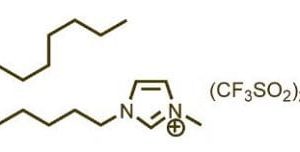
Explore our range of specialized ELISA products, including cutting-edge 1-Methyl-3-tetradecylimidazolium for enhanced assays, designed to elevate your immunoassay performance. Our solutions are engineered to provide `best ELISA stabilizer solutions` and advanced `blocking solutions for immunoassays` to meet your demanding research and diagnostic needs.
Contact Us for Expert ELISA Solutions
Have specific questions about `ELISA optimization methods` or need assistance in selecting the right `cost-effective ELISA stabilizers` and `blocking solutions` for your unique assay? Our team of experts is ready to assist you. Get in touch today to discuss how we can help you achieve `maximizing ELISA assay efficiency` and superior results.