
Stabilize Your ELISA: Blocking Solutions Explained
ELISA (Enzyme-Linked Immunosorbent Assay) is a cornerstone technique in countless biological and medical laboratories worldwide. Its power lies in its sensitivity and specificity for detecting and quantifying analytes like proteins, antibodies, hormones, and peptides. However, achieving consistently accurate and reliable ELISA results often hinges on a crucial, yet sometimes overlooked, step: effective blocking. Without proper blocking, non-specific binding can lead to high background noise, reduced signal-to-noise ratio, and ultimately, unreliable data. This comprehensive guide will delve deep into the world of blocking solutions, explaining their vital role, exploring common and advanced agents, and providing best practices to help you stabilize your ELISA assays and unlock their full potential.
Explore ELISA Stabilizers & Blocking Solutions
Understanding the Core: What Are Blocking Solutions and Why Are They Essential for ELISA?
At its heart, an ELISA involves immobilizing a reagent (e.g., an antibody or antigen) onto a solid surface, typically a microplate well. After this initial coating, there are invariably unoccupied sites on the well's surface that can non-specifically bind to subsequent assay components, such as detection antibodies or enzymes. This unwanted binding is the primary source of high background signals, which obscure the specific signal and compromise the assay's sensitivity and accuracy. This is where blocking solutions come into play.
Blocking solutions for ELISA are carefully formulated reagents designed to saturate these unoccupied sites on the microplate surface. By binding to these vacant spots, the blocking agent prevents non-specific interactions of other assay components with the plastic, thereby dramatically reducing background noise and enhancing the signal-to-noise ratio. The goal is to create a "clean" surface where only specific, intended interactions occur, allowing for precise and reliable analyte detection. This process is fundamental to how to stabilize ELISA assays and ensure their specificity.
Benefits of Blocking in ELISA: More Than Just Reducing Background
- Enhanced Specificity: Blocking agents ensure that the detection system binds only to the immobilized target, not to the plate itself, leading to highly specific results.
- Increased Sensitivity: By minimizing background noise, even low concentrations of the target analyte can be detected more reliably, improving ELISA results with blocking solutions.
- Improved Signal-to-Noise Ratio: This is a direct consequence of reduced background and enhanced specific signal, making data interpretation clearer.
- Reduced Variability: Consistent blocking helps standardize assay performance across wells and experiments, contributing to assay reproducibility.
- Extended Shelf-Life of Coated Plates: Some blocking solutions can act as stabilizers, preserving the activity of coated proteins over time, which is crucial for ELISA kits.
The Science Behind Effective Blocking: How Blocking Agents Affect ELISA
The effectiveness of a blocking solution hinges on its ability to coat the plate surface uniformly and irreversibly, without interfering with the specific antigen-antibody interactions that are the core of the ELISA. Ideal blocking agents should:
- Have no affinity for the target analyte or detection reagents.
- Be free of substances that could cross-react with assay components.
- Be soluble and stable in the assay buffer.
- Be cost-effective and readily available.
- Form a stable layer that resists displacement during subsequent washing steps.
The interaction between the blocking agent and the plastic surface is primarily hydrophobic. Proteins or polymers in blocking solutions adsorb to these hydrophobic areas, effectively passivating them. Understanding ELISA blocking techniques involves appreciating this delicate balance of surface chemistry.
Common ELISA Blocking Agents: A Comparative Look
For years, researchers have relied on a range of common ELISA blocking agents, each with its own advantages and disadvantages. Choosing the right blocking solution for ELISA is crucial for assay success.
1. Bovine Serum Albumin (BSA)
- Pros: A widely used, purified protein that effectively blocks hydrophobic sites. It's relatively inexpensive and comes in various grades (e.g., Fraction V, protease-free). Excellent for many protein-based assays.
- Cons: Can sometimes contain trace amounts of immunoglobulins or other proteins that may cross-react with certain antibodies, leading to background. Not ideal for highly sensitive assays or those involving anti-bovine antibodies.
- Application: General purpose blocking solution for protein detection.
2. Non-Fat Dry Milk (NFDM)
- Pros: Very economical and highly effective due to its diverse protein content (casein, lactalbumin, lactoglobulin). Excellent for general western blotting and many ELISA formats.
- Cons: Contains phosphoproteins (casein) that can interfere with phosphorylation-dependent antibody detection. Can cause aggregation and leave residues, making it unsuitable for highly sensitive or enzyme-linked assays where enzyme activity might be inhibited. Not recommended for biotin-streptavidin systems due to endogenous biotin.
- Application: Cost-effective option for many standard ELISAs, but requires careful validation.
3. Casein
- Pros: Purified from milk, casein offers similar blocking effectiveness to NFDM without some of the impurities. It's a phosphoprotein and can be a good blocking solution for protein detection.
- Cons: Still contains phosphoproteins, which can interfere with certain assays.
- Application: A more refined alternative to NFDM when milk components are a concern.
4. Gelatin
- Pros: Derived from collagen, gelatin provides effective blocking for some applications.
- Cons: Can be prone to microbial contamination and may require sterile filtration. Less universally effective than BSA or milk.
- Application: Used in specific immunoassays, particularly where other protein blockers cause issues.
5. Commercial Blocking Buffers
- Pros: Often proprietary formulations containing various proteins, polymers, and detergents. Designed for specific assay types (e.g., serum-free, protein-free, phosphate-free). Offer consistency, convenience, and often superior performance for difficult assays. Many are optimized for ELISA blocking buffer recommendations.
- Cons: Can be more expensive than basic protein blockers.
- Application: Ideal for sensitive assays, troubleshooting, and when optimizing ELISA results with blocking solutions.
Pioneering New Frontiers: The Role of 1-Methyl-3-tetradecylimidazolium in Assays
While traditional blocking agents have served well, the continuous demand for higher sensitivity, lower detection limits, and reduced assay times in complex matrices has driven the development of novel blocking solutions. One such promising compound making waves in advanced assay optimization is 1-Methyl-3-tetradecylimidazolium.
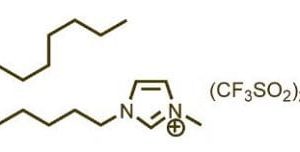
This compound, often explored in the context of ionic liquids or specialized surfactants, offers unique properties that can significantly enhance blocking efficiency, particularly for sensitive ELISA assays. Unlike large, globular proteins, 1-Methyl-3-tetradecylimidazolium can form a very thin, uniform, and stable layer on the microplate surface. Its amphiphilic nature allows it to interact strongly with both hydrophobic and hydrophilic regions of the plastic, creating a highly effective barrier against non-specific binding.
The benefits of incorporating 1-Methyl-3-tetradecylimidazolium in ELISA include:
- Superior Non-Specific Binding Reduction: Its unique molecular structure allows for more complete surface passivation compared to traditional protein blockers, leading to exceptionally low background noise.
- Improved Signal-to-Noise Ratio: Directly contributes to clearer, more quantifiable signals, crucial for detecting low-abundance analytes.
- Enhanced Assay Sensitivity: By minimizing interference, the true signal can be amplified, pushing the limits of detection.
- Reduced Matrix Effects: Can help mitigate interference from complex sample matrices, a common challenge in diagnostic and research assays.
- Stability and Consistency: As a synthetic compound, it offers high purity and lot-to-lot consistency, reducing variability in assay performance.
The role of 1-Methyl-3-tetradecylimidazolium in assays represents a significant step forward in ELISA assay optimization tips, offering a powerful tool for researchers and clinicians striving for the most accurate and reliable results in challenging applications.
Choosing the Right Blocking Solution for ELISA: A Strategic Approach
Selecting the optimal blocking solution is not a one-size-fits-all endeavor. It requires careful consideration of several factors specific to your assay:
- Assay Type: Different ELISA formats (direct, indirect, sandwich, competitive) may benefit from different blocking agents. Sandwich ELISAs, for instance, often require more robust blocking due to multiple antibody layers.
- Target Analyte: The nature of your analyte (protein, peptide, small molecule) and its potential interactions with blocking agents must be considered.
- Sample Matrix: Complex matrices like serum, plasma, or cell lysates can introduce their own non-specific binding components. The blocking solution must be robust enough to handle these challenges.
- Detection System: If your detection system uses streptavidin-biotin, avoid milk-based blockers due to endogenous biotin. If using phosphorylation-specific antibodies, avoid casein.
- Sensitivity Requirements: For highly sensitive ELISA assays, premium commercial blockers or advanced compounds like 1-Methyl-3-tetradecylimidazolium may be necessary.
- Cost and Availability: While performance is paramount, practical considerations like cost and ease of access play a role, especially for high-throughput applications.
Customizing ELISA blocking solutions often involves a systematic trial-and-error approach, testing several different agents and concentrations to find the best fit for your specific assay. This iterative process is a key part of ELISA assay optimization tips.
Best Practices for ELISA Blocking: Mastering the Technique
Beyond choosing the right agent, the application of the blocking solution itself is critical. Adhering to best practices for ELISA blocking can significantly impact your results.
- Concentration Optimization: The impact of blocking agent concentration is profound. Too little, and non-specific sites remain; too much, and it can interfere with specific binding or create high viscosity. Optimal concentrations typically range from 1-5% for protein blockers. Always validate the concentration for your specific assay.
- Incubation Time and Temperature: Blocking is usually performed at room temperature for 1-2 hours or overnight at 4°C. Longer incubation times can improve blocking efficiency but also increase the risk of contamination or protein degradation.
- Washing Steps: Thorough washing after blocking is essential to remove unbound blocking agent, which could interfere with subsequent steps. Use appropriate wash buffers (e.g., PBS-T or TBS-T).
- Buffer Compatibility: Ensure your blocking solution is prepared in a buffer compatible with your assay, typically PBS or TBS, often with a small amount of surfactant like Tween 20.
- Filtration: Filter protein-containing blocking solutions through a 0.22 µm filter to remove aggregates and microbial contamination.
- Fresh Preparation: Prepare blocking solutions fresh or store them properly (e.g., aliquoted at -20°C) to prevent degradation and contamination.
ELISA troubleshooting with blocking solutions often involves revisiting these parameters. If you encounter high background, try increasing blocking concentration or incubation time. If signal is low, ensure blocking isn't too aggressive or interfering with specific binding.
Recent Major Applications and Examples Where Blocking Shines
The meticulous application of blocking solutions is not just a theoretical concept; it's a practical necessity that underpins successful research and diagnostic breakthroughs across various fields.
1. Clinical Diagnostics: Precision in Disease Detection
In diagnostic laboratories, ELISAs are routinely used for detecting infectious diseases (e.g., HIV, Hepatitis, COVID-19 antibodies), autoimmune disorders, and cancer biomarkers. For instance, in a highly sensitive diagnostic ELISA for early cancer biomarker detection, even minute levels of non-specific binding can lead to false positives or mask true positives. Here, the use of optimized blocking solutions, potentially including advanced agents like 1-Methyl-3-tetradecylimidazolium, is critical to ensure the assay's high specificity and sensitivity, reducing the risk of misdiagnosis and improving patient outcomes. This directly relates to how to stabilize ELISA for clinical reliability.
2. Drug Discovery and Development: Unveiling Therapeutic Efficacy
Pharmaceutical companies heavily rely on ELISAs for high-throughput screening of drug candidates, quantifying drug levels in biological samples, and assessing immunogenicity. When screening thousands of compounds, robust blocking is paramount to avoid false hits that could waste significant resources. For example, in an assay designed to quantify a therapeutic antibody in patient serum, the blocking solution must effectively prevent non-specific binding of serum components to the plate, ensuring that only the therapeutic antibody is accurately measured. This is a prime example of improving ELISA results with blocking solutions in a high-stakes environment.
3. Food Safety and Environmental Monitoring: Ensuring Public Health
ELISAs are indispensable for detecting contaminants like allergens, toxins (e.g., mycotoxins), and pathogens in food products, and pollutants in environmental samples. These matrices are often complex and prone to non-specific interactions. A well-chosen blocking solution, perhaps a specialized blocking solution for sensitive ELISA assays, ensures that the assay only detects the target contaminant, preventing false positives that could lead to costly recalls or unnecessary public health alerts. This highlights the importance of understanding ELISA blocking techniques in real-world applications.
4. Basic Research: Unraveling Biological Mechanisms
From neuroscience to immunology, ELISAs are fundamental tools for quantifying proteins, cytokines, and other biomolecules. Researchers often work with precious samples and require highly accurate data. For instance, studying low-abundance cytokines in cell culture supernatants demands a blocking strategy that virtually eliminates background noise, allowing for the precise measurement of subtle biological changes. Here, the benefits of blocking in ELISA directly translate to reliable scientific discovery.
Optimize Your ELISA Performance Today!
Don't let non-specific binding compromise your valuable ELISA results. Discover our cutting-edge blocking solutions and stabilizers designed to elevate your assay's accuracy and sensitivity. Our products, including advanced formulations with 1-Methyl-3-tetradecylimidazolium, are engineered to provide the best blocking solutions for ELISA kits, ensuring your experiments yield reliable, high-quality data.
View Our ELISA Blocking & Stabilizing SolutionsFrequently Asked Questions (FAQs) on ELISA Blocking Solutions
Blocking is critical because it prevents non-specific binding of assay components (like detection antibodies or enzymes) to the microplate surface. If you skip blocking, or if it's inadequate, unoccupied sites on the plate will bind these components, leading to a high background signal. This significantly reduces the assay's signal-to-noise ratio, making it difficult to differentiate true positive signals from noise, resulting in inaccurate or unreliable data and poor sensitivity. It directly impacts your ability to stabilize ELISA results.
Choosing the best blocking solution for ELISA depends on several factors: the type of ELISA (direct, indirect, sandwich), the nature of your target analyte, the sample matrix, and your detection system. Common blocking agents include BSA, non-fat dry milk, and casein. For highly sensitive or challenging assays, consider specialized commercial blocking buffers or advanced compounds like 1-Methyl-3-tetradecylimidazolium in ELISA. It's often best to empirically test a few options to find the one that gives the lowest background and highest specific signal for your particular assay, as part of your ELISA assay optimization tips.
Yes, the impact of blocking agent concentration is significant. Using too little blocking agent will result in insufficient coverage of the plate surface, leading to high non-specific binding and background noise. Conversely, using too much blocking agent, or an agent that is too "strong," can sometimes strip off the coated antigen or antibody, or interfere with the specific binding of your detection reagents, leading to a reduced specific signal and lower sensitivity. Optimizing the concentration is a key part of how to use blocking solutions in ELISA effectively.
1-Methyl-3-tetradecylimidazolium in ELISA represents a newer generation of blocking agents, offering superior performance, especially for sensitive applications. Its unique chemical structure allows it to form a very stable and uniform blocking layer, effectively passivating both hydrophobic and hydrophilic sites on the microplate. This leads to exceptionally low background noise, improved signal-to-noise ratios, and enhanced assay sensitivity compared to traditional protein blockers. It's particularly beneficial for assays requiring ultimate precision and for overcoming matrix effects, significantly improving ELISA results with blocking solutions.
If you suspect high background is due to blocking, consider the following ELISA troubleshooting with blocking solutions steps: First, ensure you're using the correct concentration and incubation time for your chosen blocking agent. Try increasing the blocking agent's concentration or extending the incubation time. Verify the quality and freshness of your blocking solution. If using milk-based blockers, try BSA or a commercial protein-free blocker, especially if your assay involves phosphoproteins or biotin. Ensure thorough washing steps after blocking. Sometimes, a change in the type of blocking solution (e.g., from BSA to a specialized polymer-based blocker) can resolve persistent background issues.
Related Products: 1-Methyl-3-tetradecylimidazolium Solutions
Explore our range of advanced products designed to optimize your ELISA assays.
Get in Touch for Expert ELISA Support
Have more questions about optimizing your ELISA or need assistance choosing the perfect blocking solution? Contact our experts today!