
Explore Gold Conjugates: Goat Anti-Rabbit Antibodies
Unlock unparalleled sensitivity and specificity in your research with advanced gold conjugates, particularly those featuring goat anti-rabbit antibodies. This comprehensive guide delves into the cutting-edge applications, the crucial role of phosphonic acid derivatives in stable bioconjugation chemistry, and how these innovative tools are transforming diagnostics and biological research through superior nanoparticle labeling and immunological assays.
Discover Our Gold Conjugates
The Golden Standard in Immunodetection: Gold Conjugates and Goat Anti-Rabbit Antibodies
In the rapidly evolving landscape of biomedical research and diagnostics, the demand for highly sensitive, specific, and reliable detection methods is paramount. At the forefront of this innovation are gold conjugates, particularly when combined with highly specific secondary antibodies like goat anti-rabbit antibodies. These remarkable tools leverage the unique optical and electrical properties of gold nanoparticles to provide superior signal amplification, revolutionizing techniques from rapid diagnostic tests to sophisticated cellular imaging.
The synergy between gold nanoparticles and antibodies forms the bedrock of advanced immunoassays. By precisely attaching antibodies to gold nanoparticles, researchers can visualize and quantify target molecules with unprecedented clarity. This article explores the intricate world of gold-conjugated goat anti-rabbit antibodies, highlighting their foundational principles, the critical role of advanced bioconjugation chemistry, specifically the use of phosphonic acid derivatives for enhanced stability, and their profound impact across various scientific disciplines. We will delve into recent major applications, providing relevant examples to illuminate their practical significance in modern research and diagnostics.
Understanding Gold Conjugates: More Than Just a Label
The Power of Gold Nanoparticles in Research
Gold nanoparticles (AuNPs) are incredibly versatile materials, celebrated for their unique physical and chemical properties. Their strong surface plasmon resonance (SPR) results in intense colors, making them ideal for visual detection. Furthermore, their high surface-to-volume ratio provides ample sites for binding biomolecules, making them excellent candidates for nanoparticle labeling. In the context of antibody detection, gold conjugates refer to antibodies or other biomolecules that have been covalently or non-covalently attached to these gold nanoparticles.
The use of gold nanoparticles in research extends far beyond simple labeling. They act as robust signal enhancers, enabling detection of analytes at extremely low concentrations. Their biocompatibility and relative inertness also make them suitable for a wide array of biological applications, including in vivo imaging and even therapeutic delivery, though our focus here remains on their diagnostic and research utility in immunological assays.
The Evolution of Antibody Conjugation Techniques
Traditional antibody conjugation techniques have often relied on non-covalent adsorption or thiol-gold chemistry. While effective to some extent, these methods can suffer from issues like protein denaturation, non-specific binding, or instability over time. The quest for more robust and reliable conjugates has led to significant advancements in bioconjugation chemistry, with a particular emphasis on creating stable covalent linkages.
This is where phosphonic acid derivatives enter the picture. Unlike simple thiol linkages which can be susceptible to oxidation or displacement, phosphonic acids offer superior binding affinity to the gold surface, forming highly stable, covalent bonds. This enhanced stability is crucial for the long-term integrity and performance of gold conjugates, especially in complex biological matrices or demanding diagnostic environments. The precise control offered by phosphonic acid derivative synthesis allows for highly uniform and functional conjugates, critical for reproducible results in sensitive antibody detection methods.
The Specificity of Goat Anti-Rabbit Antibodies
Defining Secondary Antibodies and Rabbit Antibody Specificity
In immunology, antibodies are the workhorses for detecting specific proteins or other molecules. While primary antibodies directly bind to the target antigen, secondary antibodies are designed to bind to primary antibodies. Goat anti-rabbit antibodies are a prime example of a secondary antibody, raised in goats against the immunoglobulins (antibodies) produced by rabbits. This inherent rabbit antibody specificity makes them indispensable for detecting rabbit primary antibodies in a wide range of experimental setups.
Rabbit antibodies are widely used in research due to their high affinity, specificity, and the ease with which polyclonal antibodies can be generated against various antigens. Therefore, a reliable and sensitive method to detect these rabbit primary antibodies is essential. Gold-conjugated goat anti-rabbit antibodies provide precisely this, acting as a visual reporter for the presence of the primary antibody, and by extension, the target antigen.
Goat Antibodies in Immunology: A Versatile Tool
The versatility of goat antibodies in immunology is well-established. They are commonly employed as secondary antibodies because they can be easily engineered and conjugated to various labels, including enzymes, fluorophores, and crucially, gold nanoparticles. When these goat antibodies are conjugated to gold, they combine their inherent specificity with the powerful signal amplification capabilities of gold, leading to enhanced detection limits and clearer results in complex biomolecular interactions studies.
The Powerful Synergy: Gold Conjugated Goat Anti-Rabbit Antibodies
The combination of gold nanoparticles with goat anti-rabbit antibodies represents a significant advancement in molecular detection. This synergy creates highly sensitive probes capable of visualizing and quantifying targets with exceptional precision. The key advantages include:
- Enhanced Sensitivity: The high extinction coefficient of gold nanoparticles allows for detection of even minute quantities of target molecules, making them superior for low-abundance analytes. This directly impacts the sensitivity of antibody detection methods.
- Rapid Detection: In many applications, particularly lateral flow assays, the visual signal from gold nanoparticles provides rapid, on-site results.
- Versatility: Gold conjugates can be adapted for various platforms, from simple dipstick tests to sophisticated microscopy techniques.
- Stability: When properly conjugated, especially using methods involving phosphonic acid derivatives, these conjugates exhibit excellent long-term stability, reducing degradation and ensuring reliable performance. This addresses a critical aspect of gold nanoparticle stability in real-world applications.
The careful selection of antibody conjugation techniques is paramount. Achieving optimal performance requires not just attaching the antibody to the gold, but ensuring it retains its full binding activity and that the conjugate remains stable under various conditions. This is where the advanced bioconjugation chemistry, particularly the application of phosphonic acids, proves invaluable for producing high-quality gold conjugates.
Recent Major Applications of Gold Conjugates in Research and Diagnostics
The impact of gold-conjugated goat anti-rabbit antibodies is vast, spanning numerous fields. Here, we explore some of the most significant and recent applications, demonstrating their transformative power in nanotechnology in antibody research and beyond:
1. Immunoassays: Revolutionizing Diagnostics
Immunoassays are perhaps the most common and impactful application of gold conjugates for diagnostics. They are designed to detect the presence or concentration of a macromolecule in a solution, often using an antibody as a recognition element. Gold conjugates dramatically improve these assays:
- Lateral Flow Immunoassays (LFIAs): These rapid, point-of-care tests are ubiquitous, from home pregnancy tests to rapid COVID-19 antigen tests. In an LFIA, gold-conjugated goat anti-rabbit antibodies (following binding of a rabbit primary antibody to the analyte) produce a visible red line, indicating a positive result. The bright color of the gold nanoparticles eliminates the need for complex instrumentation, making these tests accessible and fast. This is a prime example of effective nanoparticle labeling for immediate results.
- ELISA (Enzyme-Linked Immunosorbent Assay) Enhancement: While traditional ELISA uses enzyme-linked antibodies, gold nanoparticles can replace or augment enzyme reporters. Gold nanoparticles offer direct colorimetric readout or can be used in electrochemical ELISA, significantly enhancing sensitivity for detecting low-abundance biomarkers, crucial in early disease diagnosis. This represents a significant leap in antibody detection methods.
Example: In a rapid diagnostic test for a specific pathogen, a rabbit primary antibody might capture the pathogen. Subsequently, gold-conjugated goat anti-rabbit antibodies bind to the captured primary antibody, creating a visible signal on the test strip, providing a quick and clear diagnosis without laboratory equipment. This showcases the power of gold conjugates for diagnostics.
2. Immunohistochemistry (IHC) and Immunocytochemistry (ICC)
For visualizing specific proteins within tissue sections (IHC) or cells (ICC), gold-conjugated antibodies provide excellent contrast and resolution. After a rabbit primary antibody binds to its target in the tissue, the gold-conjugated goat anti-rabbit antibodies are applied, allowing researchers to precisely localize the protein under a microscope. The electron-dense nature of gold also makes these conjugates ideal for high-resolution imaging using electron microscopy, offering unparalleled insight into cellular ultrastructure and protein localization. This is a direct application of gold conjugates for imaging at a microscopic level.
Example: Researchers studying neurological disorders might use a rabbit primary antibody to target a specific protein implicated in disease progression in brain tissue. Subsequent staining with gold-conjugated goat anti-rabbit antibodies allows for clear visualization of the protein's distribution and abundance within neurons, providing critical data on disease pathology. The precision enabled by rabbit antibody specificity combined with gold signal is invaluable.
3. Biosensors and Surface Plasmon Resonance (SPR)
Gold nanoparticles are central to the development of highly sensitive biosensors. Their ability to alter optical or electrical signals upon binding makes them excellent transducers. In SPR-based biosensors, the binding of gold-conjugated antibodies to a surface-bound antigen changes the refractive index, which is detected as a shift in the SPR signal. This allows for real-time, label-free (or label-enhanced) monitoring of biomolecular interactions, crucial for drug discovery and fundamental biological studies. The stability afforded by new phosphonic acid applications in surface chemistry is vital here.
Example: A biosensor designed to detect cancer biomarkers in patient samples could utilize a rabbit primary antibody immobilized on a chip. The subsequent binding of gold-conjugated goat anti-rabbit antibodies to the primary antibody (after it captures the biomarker) enhances the SPR signal, enabling highly sensitive and rapid detection of the biomarker, even at very low concentrations. This demonstrates how nanotechnology in antibody research pushes detection limits.
4. Flow Cytometry
While fluorescence is common in flow cytometry, gold-conjugated antibodies can also be used, particularly when combined with techniques that detect light scattering or mass spectrometry-based detection (Mass Cytometry). Gold nanoparticles offer a unique spectral signature and can be used to label specific cell populations for sorting and analysis, providing an alternative to traditional fluorophores and expanding the multiplexing capabilities of flow cytometry. This expands the utility of gold conjugates for imaging in a high-throughput context.
5. Advanced Imaging and Therapeutic Applications (Emerging)
Beyond traditional detection, the unique properties of gold nanoparticles are being explored for advanced imaging modalities and even therapeutic applications. This includes using gold conjugates for photoacoustic imaging, where the nanoparticles absorb light and convert it into detectable sound waves, or as agents for photothermal therapy, where they generate heat to destroy target cells. While still emerging, these applications highlight the vast potential of gold nanoparticles in research beyond simple detection.
The Crucial Role of Phosphonic Acid Derivatives in Stable Conjugation
The performance of any gold conjugate hinges critically on the stability and functionality of the bond between the gold nanoparticle and the antibody. For years, traditional methods often involved simple physisorption or thiol-gold bonds. However, these methods can lead to issues such as antibody denaturation, leaching of the antibody from the gold surface over time, or non-specific binding, all of which compromise the assay's sensitivity and reliability. This is particularly problematic for long-term storage or use in complex biological samples, impacting overall gold nanoparticle stability.
The advent of phosphonic acid derivatives has revolutionized bioconjugation chemistry for gold nanoparticles. Phosphonic acids possess a strong affinity for metal oxide surfaces and, crucially, for gold. They form robust, covalent bonds with the gold surface, creating an exceptionally stable conjugate. This enhanced stability offers several key advantages:
- Superior Conjugate Stability: Phosphonic acid-linked conjugates are significantly more stable against harsh conditions, including varying pH, high salt concentrations, and the presence of competing molecules, which can displace less stable linkages. This directly translates to more reliable and reproducible results in immunological assays.
- Reduced Non-Specific Binding: The stable and often oriented attachment of antibodies via phosphonic acids can lead to a more uniform surface coating, which helps in minimizing non-specific interactions that can cause false positives or high background signals.
- Preservation of Antibody Activity: By forming a strong, controlled linkage, phosphonic acid derivatives help in preserving the native conformation and binding activity of the goat anti-rabbit antibodies, ensuring optimal performance in target recognition.
- Longer Shelf Life: Conjugates prepared with phosphonic acid derivatives exhibit significantly extended shelf lives, reducing the need for frequent batch preparation and ensuring consistent quality over time. This is vital for commercial gold conjugates for diagnostics.
The phosphonic acid derivative synthesis process is engineered to create molecules that not only bind strongly to gold but also provide functional groups for efficient and gentle attachment of antibodies. This precise control over the conjugation process is a hallmark of advanced nanotechnology in antibody research, ensuring that the final gold conjugates deliver maximum performance. The growing number of phosphonic acid applications in material science and biotechnology underscores their importance beyond just gold conjugation.
Challenges and Future Directions in Gold Conjugate Technology
Despite their widespread success, the field of gold conjugates continues to evolve. Challenges include ensuring batch-to-batch consistency in nanoparticle size and conjugation efficiency, optimizing protocols for diverse antibody types, and developing even more robust and multiplexable detection platforms. Research into novel antibody conjugation techniques and the exploration of new surface chemistries, building upon the successes of phosphonic acid derivatives, are ongoing.
The future of gold-conjugated goat anti-rabbit antibodies lies in further enhancing their sensitivity, enabling quantitative analysis in point-of-care settings, and integrating them into multi-modal detection systems that combine different signaling mechanisms. As nanotechnology in antibody research advances, we can expect even more sophisticated and accessible diagnostic and research tools to emerge, further solidifying the role of these powerful conjugates in advancing scientific discovery and improving human health. Continued innovation in antibody purification methods also plays a role in ensuring high-quality starting material for conjugation.
Related Products: Phosphonic Acid Derivatives
-
Sale!

n-Alkylphosphonic acids, kit – 7 x 5g
Original price was: ₹165,000.00.₹19,690.00Current price is: ₹19,690.00. -
Sale!

n-Decylphosphonic Acid
Original price was: ₹28,490.00.₹10,890.00Current price is: ₹10,890.00. -
Sale!

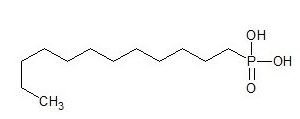
n-Dodecylphosphonic Acid
Original price was: ₹27,400.00.₹18,290.00Current price is: ₹18,290.00. -
Sale!

n-Hexadecylphosphonic Acid
Original price was: ₹29,840.00.₹19,890.00Current price is: ₹19,890.00. -
Sale!

n-Hexylphosphonic Acid
Original price was: ₹31,500.00.₹20,700.00Current price is: ₹20,700.00. -
Sale!

n-Octadecylphosphonic Acid
Original price was: ₹33,470.00.₹21,700.00Current price is: ₹21,700.00. -
Sale!

n-Octylphosphonic Acid
Original price was: ₹31,500.00.₹20,700.00Current price is: ₹20,700.00. -
Sale!

n-Tetradecylphosphonic Acid
Original price was: ₹30,300.00.₹20,200.00Current price is: ₹20,200.00.




Frequently Asked Questions about Gold Conjugates and Goat Anti-Rabbit Antibodies
Ready to Elevate Your Research?
Explore our range of high-quality gold conjugates and phosphonic acid derivatives designed for superior performance and stability in your critical assays.
View Our Gold Conjugate ProductsGet in Touch with Our Experts
Have specific questions or need custom solutions for your bioconjugation needs? Contact our team for personalized assistance.