

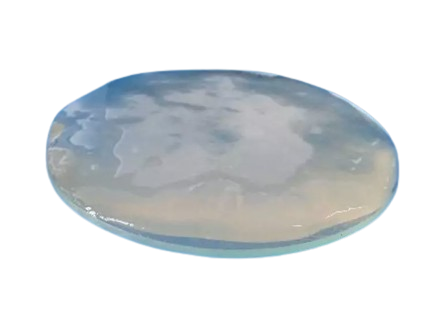
Key Features:
- Natural Origin: Sourced from renewable plant cellulose, ensuring sustainability and environmental compatibility.
- Nano-Dimensions: Fibers with diameters ranging from 4 to 10 nm and lengths between 100 to 500 nm provide a high surface area for enhanced interaction in composite materials.
- Surface Functionality: Presence of carboxyl and hydroxyl groups facilitates superior dispersion in aqueous systems with pH values from 5 to 14, enabling easy integration into diverse formulations.
- Thixotropic Behavior: Exhibits adjustable thixotropic indices between 7 and 9, allowing for tailored rheological properties in end-use applications.
Material Specifications:
Property | Specification |
Product Name | Carboxylated Modified Cellulose Nanocrystals |
Chemical Composition | Modified Cellulose |
Form | Dry Powder |
Fiber Diameter | 4–10 nm |
Fiber Length | 100–500 nm |
Surface Groups | Carboxyl / Hydroxyl |
Crystal Structure | Cellulose I |
Carboxyl Content | N/A |
pH Value | 7–8 |
Applications:
C-CNCs are versatile materials suitable for a wide range of applications:
Coatings and Inks: Serve as thixotropic agents, thickeners, and reinforcing agents, enhancing the mechanical properties and stability of coatings and inks.
Liquid Crystal Materials: Utilized in hand-shaped liquid crystal materials, contributing to improved performance and durability.
Anti-Counterfeiting Materials: Incorporated into security features due to their unique optical properties, aiding in the prevention of product forgery.
Pharmaceuticals: Act as drug sustained-release agents and pharmaceutical excipients, improving drug delivery systems.
Dispersants: Employed to stabilize suspensions and emulsions in various industrial processes.
Dispersion Method:
To achieve optimal dispersion of C-CNCs:
Pre-Dispersion: Introduce the dry powder into a high-concentration colloid using high-speed mixing to ensure uniform distribution.
Integration: Combine the pre-dispersed colloid with the target product, followed by stirring and dispersion using conventional equipment to achieve a homogeneous mixture.
Additional Resources:
For further insights into the properties and applications of carboxylated cellulose nanocrystals, consider exploring the following resources:
Preparation and Surface Functionalization of Carboxylated Cellulose Nanocrystals
Advance Study of Cellulose Nanocrystals Properties and Applications
Cellulose Nanocrystals Applications in Health, Medicine and Catalysis
These articles provide comprehensive information on the synthesis, functionalization, and diverse applications of cellulose nanocrystals, offering valuable knowledge for researchers and industry professionals.
By integrating Carboxylated Modified Cellulose Nanocrystals into your products, you can leverage their unique properties to enhance performance, sustainability, and innovation across various applications.


