
Material Data
Product Name | Cellulose Nanocrystals (CNC) |
Chemical Composition | Cellulose |
Concentration | 5% |
Fiber Diameter | 1–10 nm |
Fiber Length | 200–800 nm |
Preparation Method | Acid Hydrolysis |
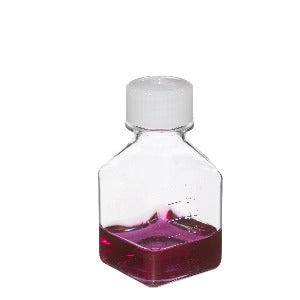
Product Appearance
Product Characterization
The electron microscope image above illustrates the nanoscale structure of CNCs, highlighting their uniformity and high aspect ratio.
Instructions for Use
CNCs can be uniformly dispersed in water or solvents and then integrated with various matrix materials to enhance mechanical properties. For optimal dispersion, mix CNCs with water using a high-speed blender. They are also suitable for creating transparent films and gels, which are valuable in biomedical and electronic applications. Store CNCs in a dry environment to prevent moisture absorption.
Applications of Cellulose Nanocrystals
Reinforcement in Composite Materials: CNCs serve as reinforcing agents in polymers and composites, significantly improving mechanical strength and stiffness.
Biomedical Engineering: Due to their biocompatibility, CNCs are utilized in drug delivery systems, tissue engineering scaffolds, and wound dressings.
Coatings and Packaging: The transparency and barrier properties of CNCs make them ideal for eco-friendly coatings and packaging materials, enhancing durability and reducing permeability.
Electronics: CNCs contribute to the development of flexible electronic devices, including displays and sensors, owing to their unique optical properties.
Advantages of Cellulose Nanocrystals
Renewable and Biodegradable: Sourced from natural cellulose, CNCs are environmentally friendly and reduce reliance on petroleum-based materials.
High Surface Area: The substantial surface area of CNCs facilitates effective interaction with other materials, enhancing composite performance.
Thermal Stability: CNCs exhibit remarkable thermal stability, making them suitable for applications requiring high-temperature processing.
References
"Advance Study of Cellulose Nanocrystals Properties and Applications," Journal of Polymers and the Environment, 2020. Link
"Nanocellulose: From Fundamentals to Advanced Applications," Frontiers in Chemistry, 2020. Link
"Cellulose Nanocrystals - A Material with Unique Properties and Many Applications," USDA Forest Service, 2013. Link
By integrating CNCs into your products, you can leverage their superior properties to achieve enhanced performance and sustainability. For more information or to place an order, please contact us.