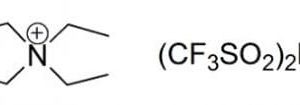
Ionic liquids (ILs) are emerging as transformative components in the development of next-generation batteries, offering significant enhancements in both performance and safety. These unique compounds, composed entirely of ions, exhibit properties that make them ideal candidates for advanced electrolyte solutions.
Advantages of Ionic Liquids in Battery Technology
Wide Electrochemical Stability:
ILs possess a broad electrochemical window, enabling them to operate effectively at higher voltages without decomposing. This characteristic is crucial for high-energy-density batteries.
High Ionic Conductivity:
The intrinsic ionic nature of ILs facilitates efficient ion transport, which is essential for rapid charging and discharging cycles.
Thermal Stability:
ILs maintain stability over a wide temperature range, ensuring consistent battery performance under varying environmental conditions.
Low Volatility and Flammability:
Unlike conventional organic solvents, ILs have negligible vapor pressure and are typically non-flammable, significantly reducing the risk of leakage and fire hazards.
Applications in Next-Generation Batteries
Lithium-Sulfur Batteries: ILs serve as effective electrolytes in lithium-sulfur systems, mitigating issues such as polysulfide dissolution and enhancing cycle life.
Metal-Air Batteries: In metal-air configurations (e.g., lithium-air, zinc-air), ILs provide stable electrolytic environments, improving efficiency and durability.
Solid-State Batteries: ILs can be incorporated into solid-state electrolytes, combining the safety of solid electrolytes with the high ionic conductivity of liquids.
Recent Developments
Research has demonstrated that incorporating ILs into battery systems can lead to significant performance improvements. For instance, studies have shown that IL-based electrolytes in lithium-metal batteries enhance interfacial stability and ionic conductivity, resulting in better capacity retention and safety profiles.
Lab Manager
Conclusion
The integration of ionic liquids into battery technology represents a promising pathway toward safer, more efficient, and higher-performing energy storage solutions. As research and development continue, ILs are poised to play a pivotal role in powering the next generation of batteries, meeting the growing demands for sustainable and reliable energy storage.